Super typhoons cause severe damage to mangroves, but save the lives of thousands of people.
You can believe me when I say that we haven’t had much time to enjoy the Philippines under palm trees over the last eight weeks. Every day was packed with activities, because we’re not only planting massive number of mangroves, but also doing some experiments to make planting even more effective and restore more areas to their natural state. For example, we’ll soon be trying out planting mangroves in bamboo tubes again to protect them from strong currents and sand migration in the first few months. We used this method to plant mangroves on the small island of Sanipaan (Marine Park) off the coast of Samal Island almost 20 years ago. The sandbar is underwater during high tide and can only be accessed at low tide, and has since become a popular destination for tourists.
Now we are repeating the process in San Isidro, Davao Oriental, about 30 minutes from Mati. We are getting the bamboo poles free of charge from the former mayor, the preliminary work is being done by the Manikling Mangrove Group, and students from the university are documenting this experiment to demonstrate a planting method that has proven successful. We will be able to report more in February 2026.
Our mangrove event on November 14 on Sunset Boulevard in Baganga required a lot of preparatory work and effort on the part of our planters. But it was worth it. Over 250 visitors attended, including the political team from Baganga. As is well known, the festival had to be postponed due to the severe earthquake. But the planters are now minor celebrities, which is a positive development. There were many words of praise, which are part and parcel of the celebrations here.


As a reminder, we planted over a million mangroves in Baganga in less than a year, thanks to the tremendous efforts of everyone involved. The guests also learned that planting mangroves is not a side activity, but hard physical work. We had provided 250 mangroves for the guests, but were able to take half of them back to the nursery because the volunteers quickly worked up a sweat. Even though not all of the mangroves were planted, the buffet was completely cleared after the celebration.
Sunset Boulevard is a place with great symbolic significance. It was here that the typhoon wreaked havoc in December 2012. Some witnesses to the disaster are still standing. After eight to nine years, many of the apple mangroves (Sonneratia alba) have begun to sprout again, even though they were leafless for many years. A sign of hope that also demonstrates the forces of nature. However, the sprouting of leaves also shows us that nature can recover if we let it. Unfortunately, we do not have the time to wait until the scars have healed, as this can easily take a century or more. We must therefore do everything in our power to support nature on its path to regeneration.
We are gradually preparing further planting areas in Baganga North. As a reminder, there is still space for around 1.5 million trees in the southern part and around 8 million in the northern part. We have agreed with the DENR to conduct further training courses to explain the importance of intact mangrove forests to local residents. The program is already underway.
Pujada Bay, Mati City, Davao Oriental, is reforested from our point of view, except for the limestone areas in Guang guang and a few small coastal sections. The limestone areas are a major challenge. They urgently need to be restored to their original condition, as we have reported several times. Since the water levels above the limestone layer are sometimes only a few centimeters, the seawater is heated up, especially by the high sun. At temperatures above 60 degrees Celsius, the limestone dissolves out of the water and trickles onto the existing layer, which becomes a little thicker each time and is already as hard as a concrete floor. Here, seeds can no longer naturally access the sediments.


Our tried-and-tested approach is to drill holes in the limestone soil to reach the sediments below. The mangrove seedlings are planted directly into these holes in the sediments, where they find sufficient nutrients to grow. We start at the edges of the open areas and slowly work our way toward the center. The canopy of the mangroves shades the sun and keeps the water temperature below 60 degrees Celsius. Further calcification is stopped. The roots later break up the limestone layer and nature can recover.
Chiara sold T-shirts at Boris Herrmann’s camp in Kiel, Germany, the starting point for the 2025 Ocean Race, to raise money for further mangrove planting in the Philippines. As she was working in Mati until the end of November to complete her master’s thesis on mangroves, she was even able to help plant the first mangroves. You may be interested in watching this video. It can be found under Malizia Mangrove Park on Facebook and Instagram.
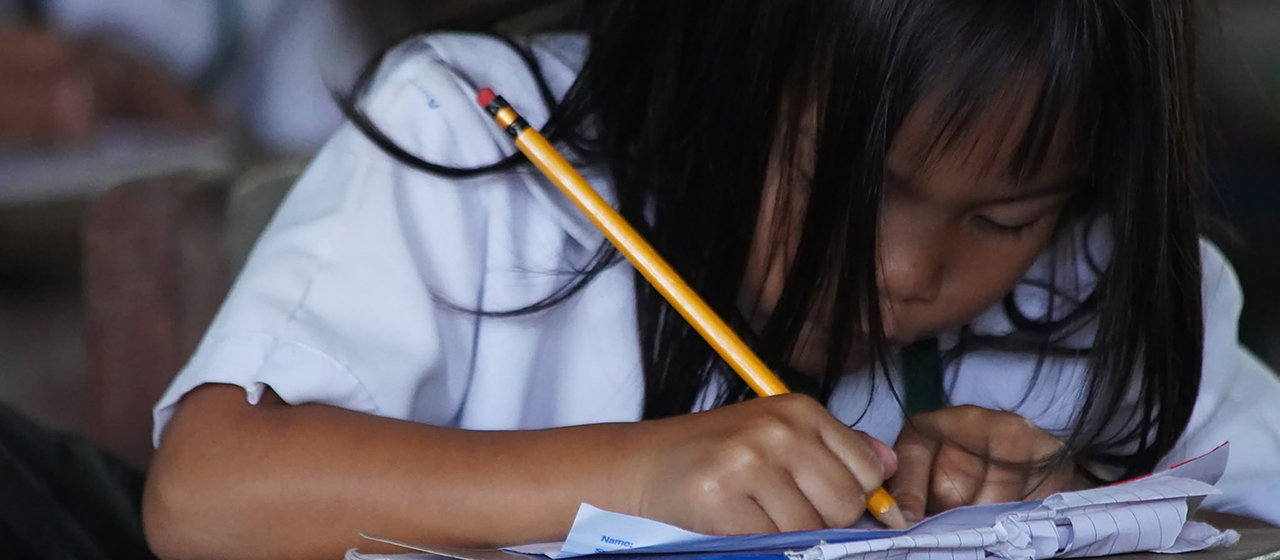
One of the Mama Earth Foundation’s commitments is to promote better education. As is well known, we have marine debris recycled into school chairs, we already support groups of children in Mati in preventing plastic pollution and collecting rubbish, and we have also installed water dispensers and distributed tumblers as a pilot project to reduce single-use plastic water bottles, etc. What is new is that we are now talking directly to schoolchildren, thanks to technology. And we can see that the children and young people are enthusiastic. They have lots of questions. And our answers come from our daily work; we don’t read from prepared scripts, but tell them how we do things.