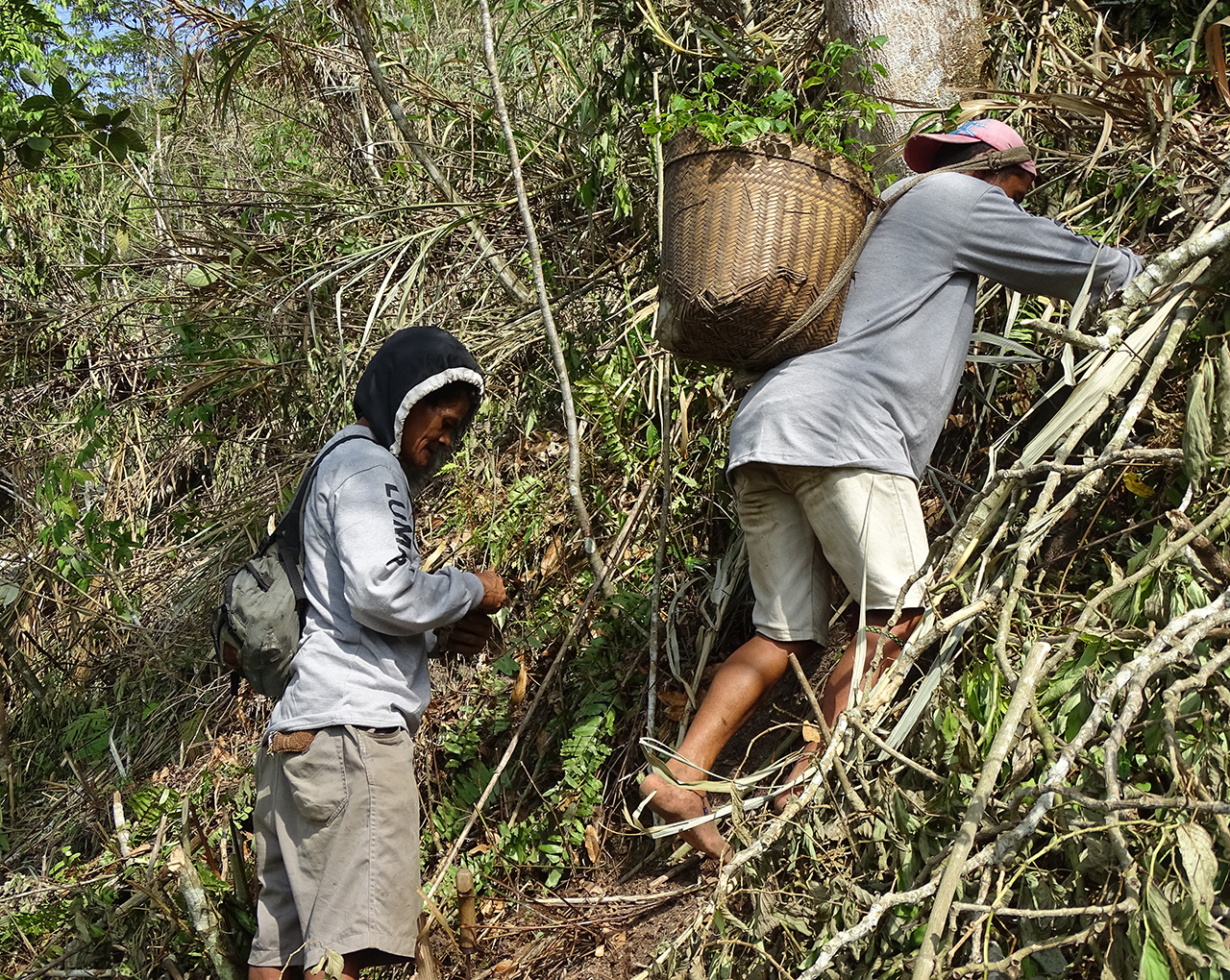
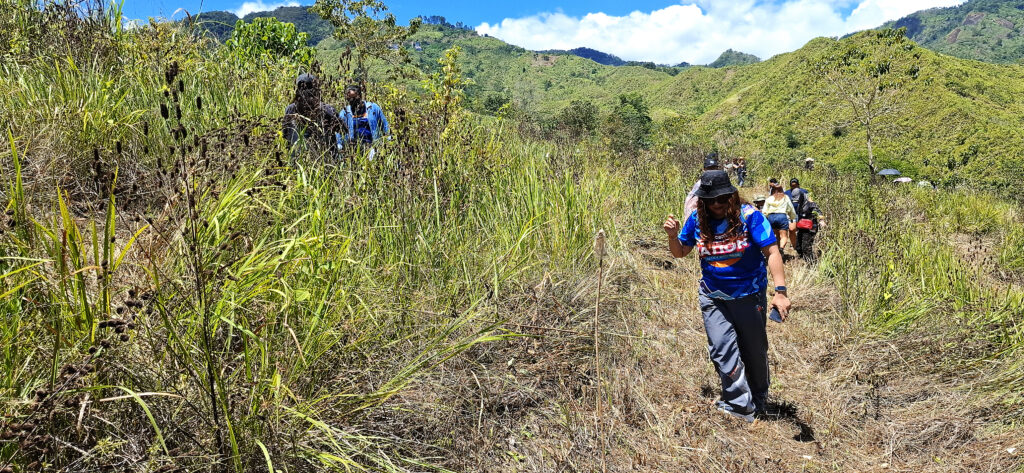
Deforested by logging companies. Fortunately, the waist-high grass has held the topsoil in place.
“Whoever plants a tree plants a hope.” says Lucy Larcom
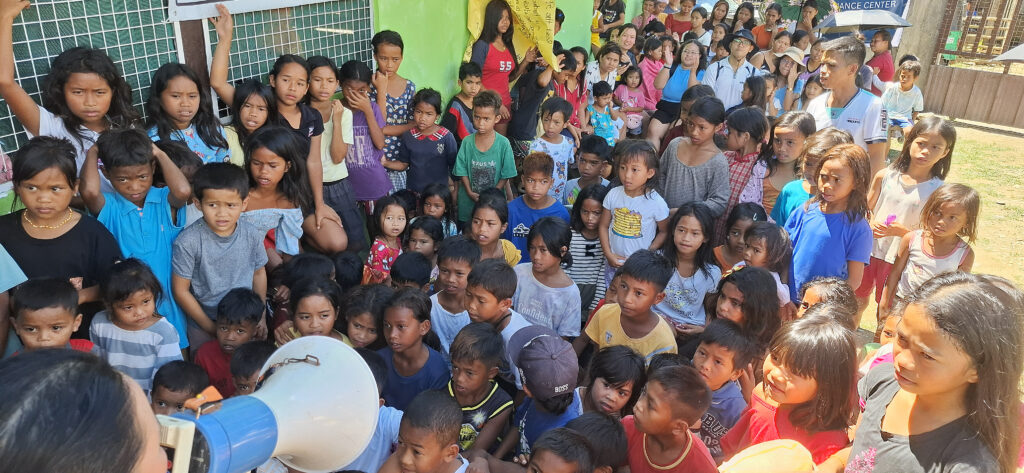
Our planting activities in the mountains have taken a back seat somewhat due to the large-scale mangrove plantings in Baganga. Even though our efforts aren’t always visible, we’re always active. At the end of April, we partnered with Concentrix, a company from Davao—with whom we also plant mangroves in San Isidro—to plant the second wave of endemic trees in Patag, Marilog. The Mama Earth Foundation team covered the costs of the preparations and the seedlings. We cut back the tall grass, dug the holes, and transported the saplings to the planting sites. Concentrix arrived with 190 people, as a fun reading event for the children in Patag took place after the planting, followed by the distribution of free school supplies.
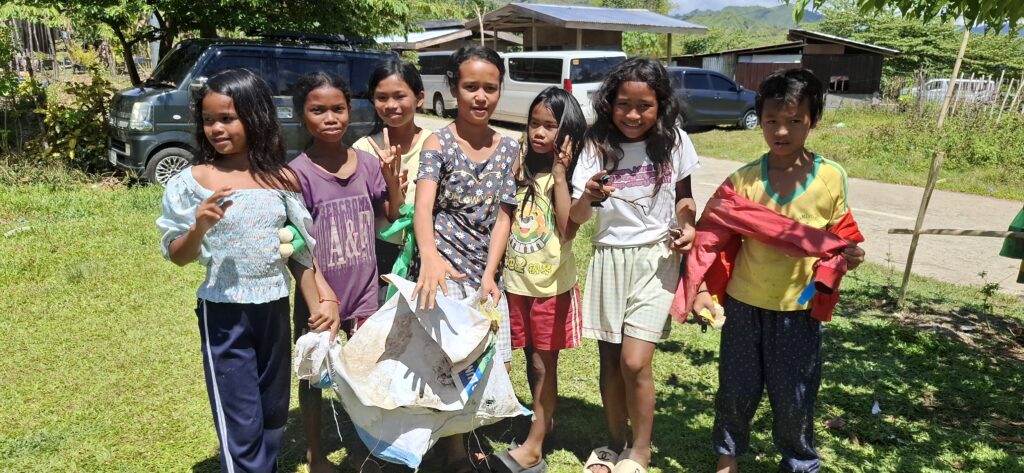
Now, not only are there 300 more native trees growing in Patag—though at least ten million are still missing—but the children had a great day. And it gets even better: the next batch of free school chairs will go to the elementary school in Patag. However, we have established a rule for the free distribution of school chairs, which we also enforce: The teaching staff must ensure that there is no litter on the streets within a wide radius of the school. If we find litter on the streets during our next visit, no more school chairs will be delivered. Our goal is to draw attention to the growing flood of plastic worldwide.
If you’d like to help us plant more trees in the mountains of Marilog, you’ve come to the right place:
https://mama-earth.eco/mytree-your-personal-tree-with-coordinates-and-photo-in-a-premium-gift-card/
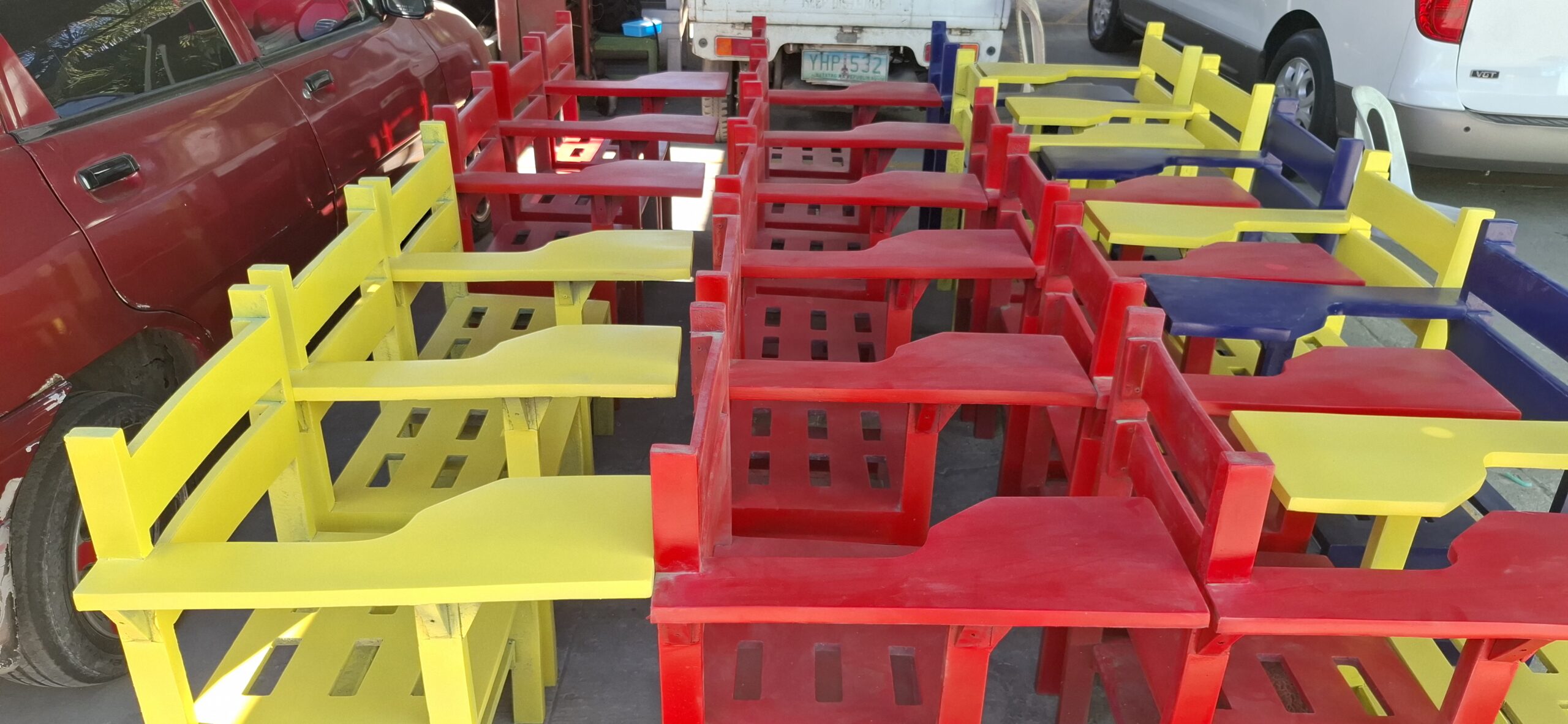
My friend Gerald Nowak, who, along with his wife Sibylle, has been doing so much to support the school chair initiative, asked us a simple question that made us blush: “How many of the school chairs we’ve delivered are for left-handed children?” Our embarrassing answer: zero. We’re going to change that. According to our research, the figure is approximately 15 percent (Google puts it at 12.21%). These figures are thus comparable to those in Germany. We immediately consulted with the recycling company and learned that chairs for left-handed children are also manufactured. So in the future, for every 100 school chairs we order, 14 will have a writing surface on the left side. If you’d like to donate one or more school chairs, you can find more information here:
https://mama-earth.eco/plastic-trash-pest-for-our-wonderful-world/
As you may know, we still have many giant rainforest trees available in our small Toog Park in Montevista, Davao de Oro. These majestic trees will surely continue to grow there for another 200 years. Feel free to sponsor one—perhaps to celebrate your wedding, or simply as a gift for your next birthday.
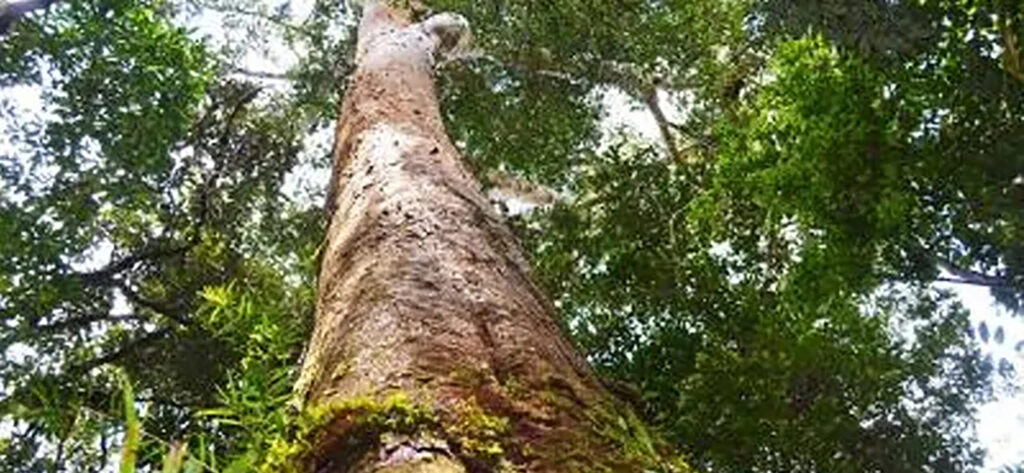
We are currently looking for Almaciga (Agathis philippinensis) seedlings. They seem to be almost impossible to find, but we have good contacts. This massive conifer is known as “The King of the Forest” and can grow up to 60 meters tall (photo: Forestry). Since Almaciga is now considered an endangered species, we must take action. Hopefully, more information will be available soon.
Mangroves
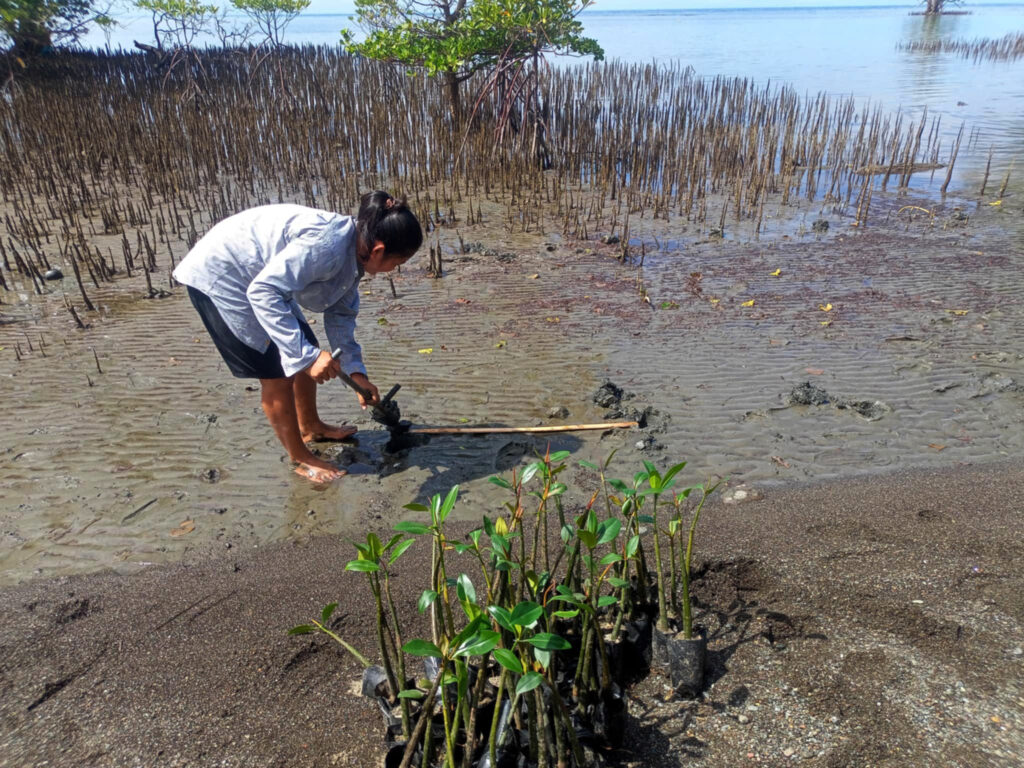
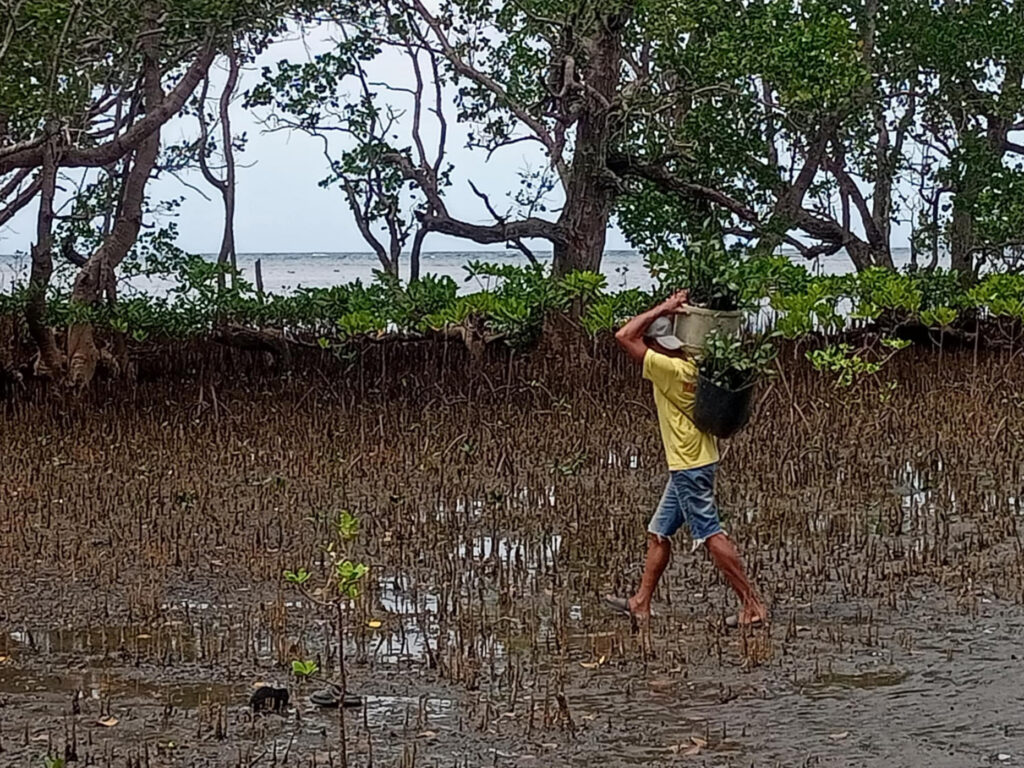
We can’t do without mangroves entirely. First, the bad news: Our drone crashed during the documentary flights because a sudden gust of wind pushed it into the mangroves. We always have to fly as low as possible for the documentation, but this time it was too low. Now it’s at the drone clinic in Davao. Hopefully it can be repaired and we can resume our work without having to buy a new drone.
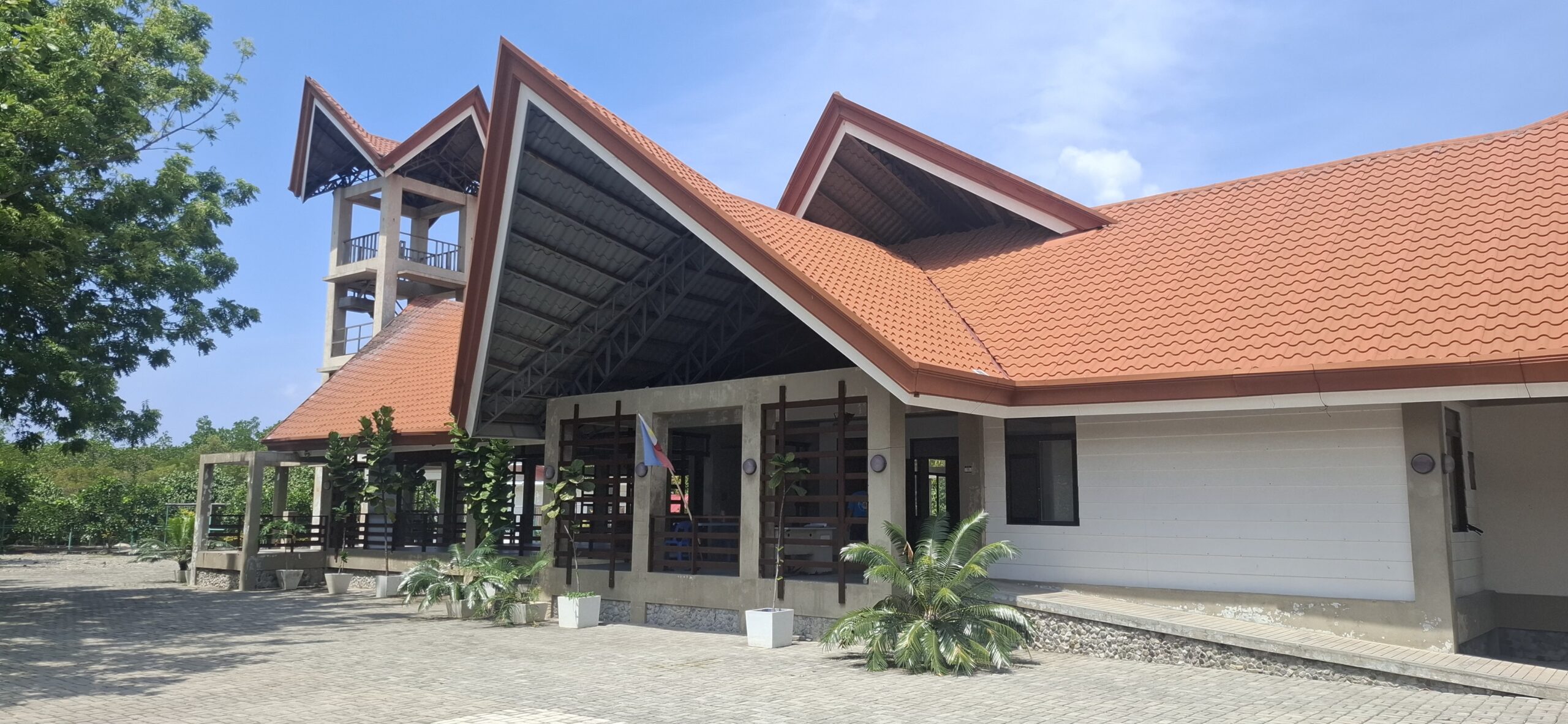
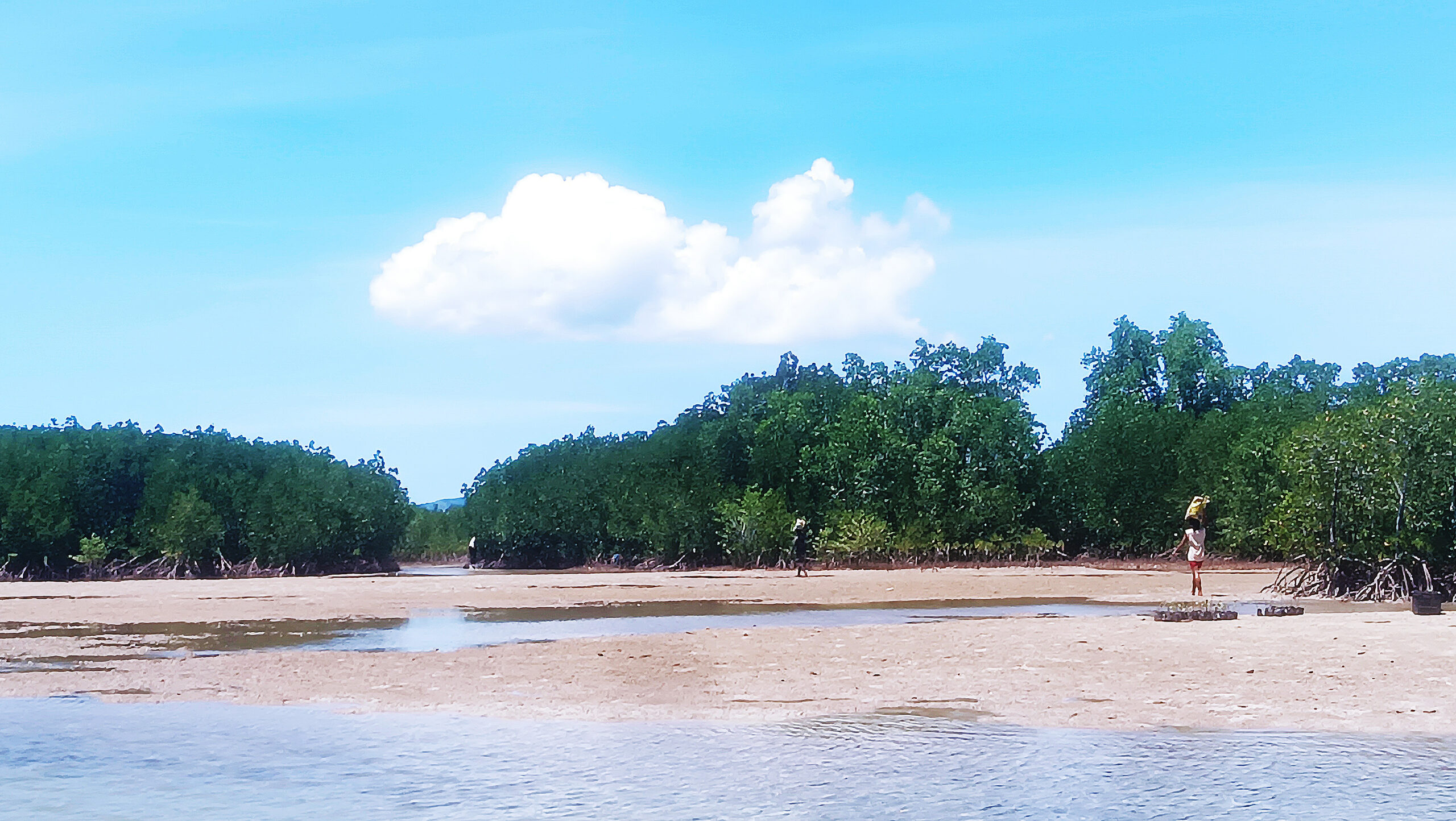
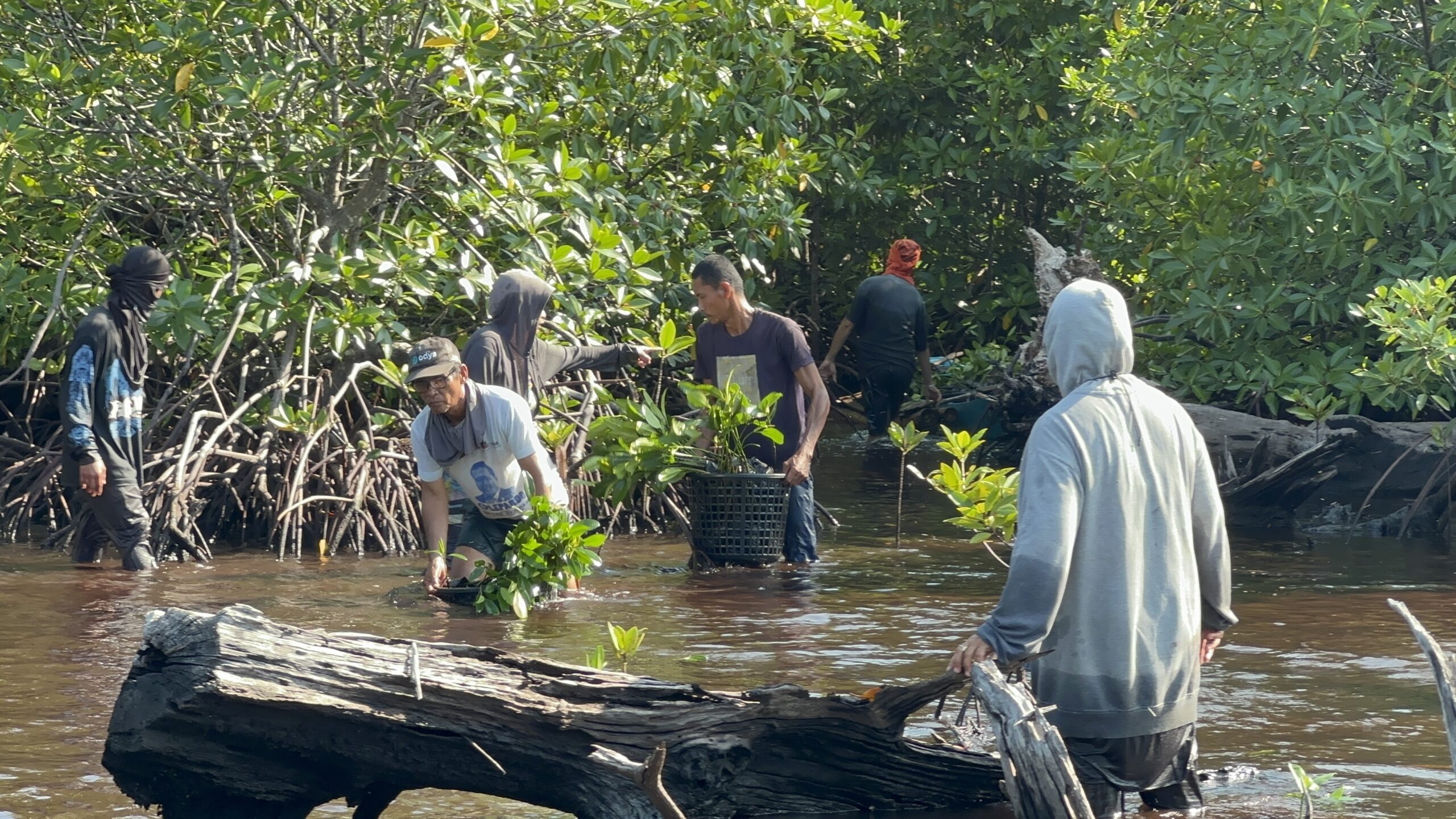
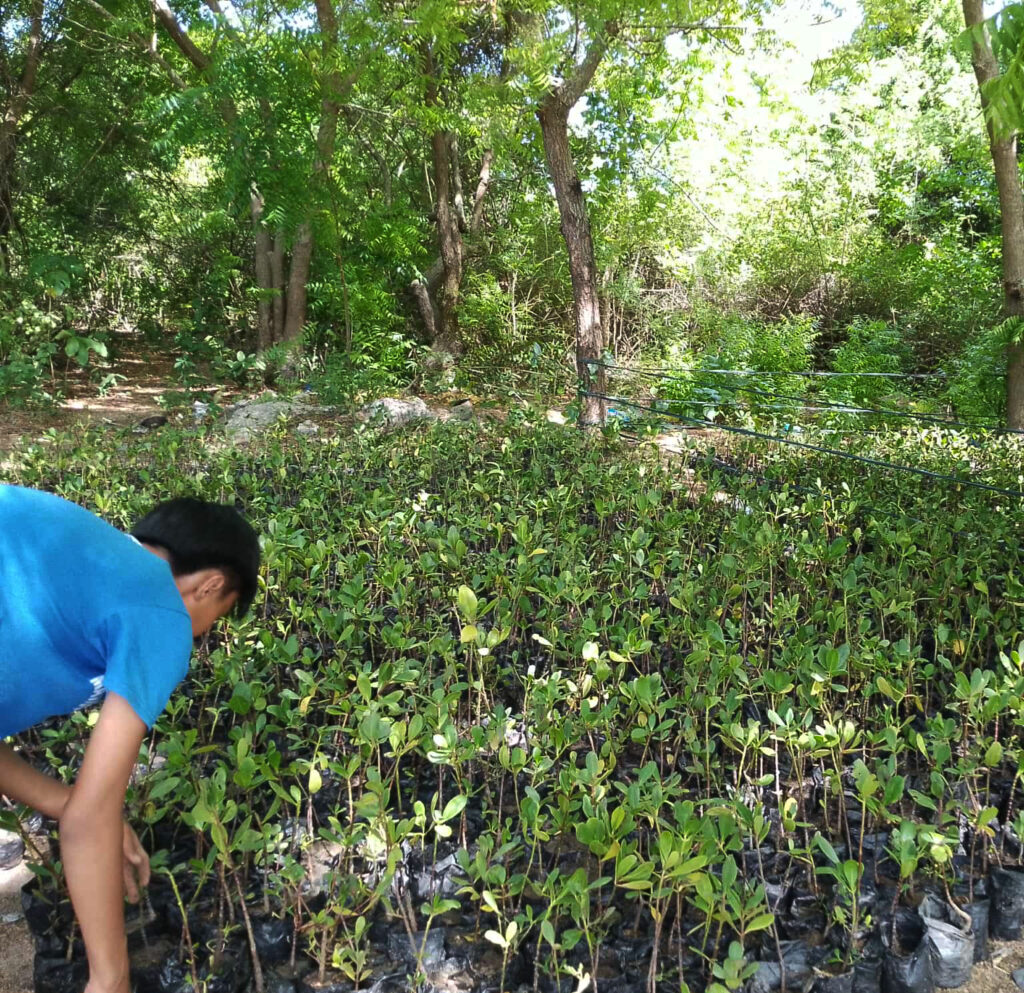
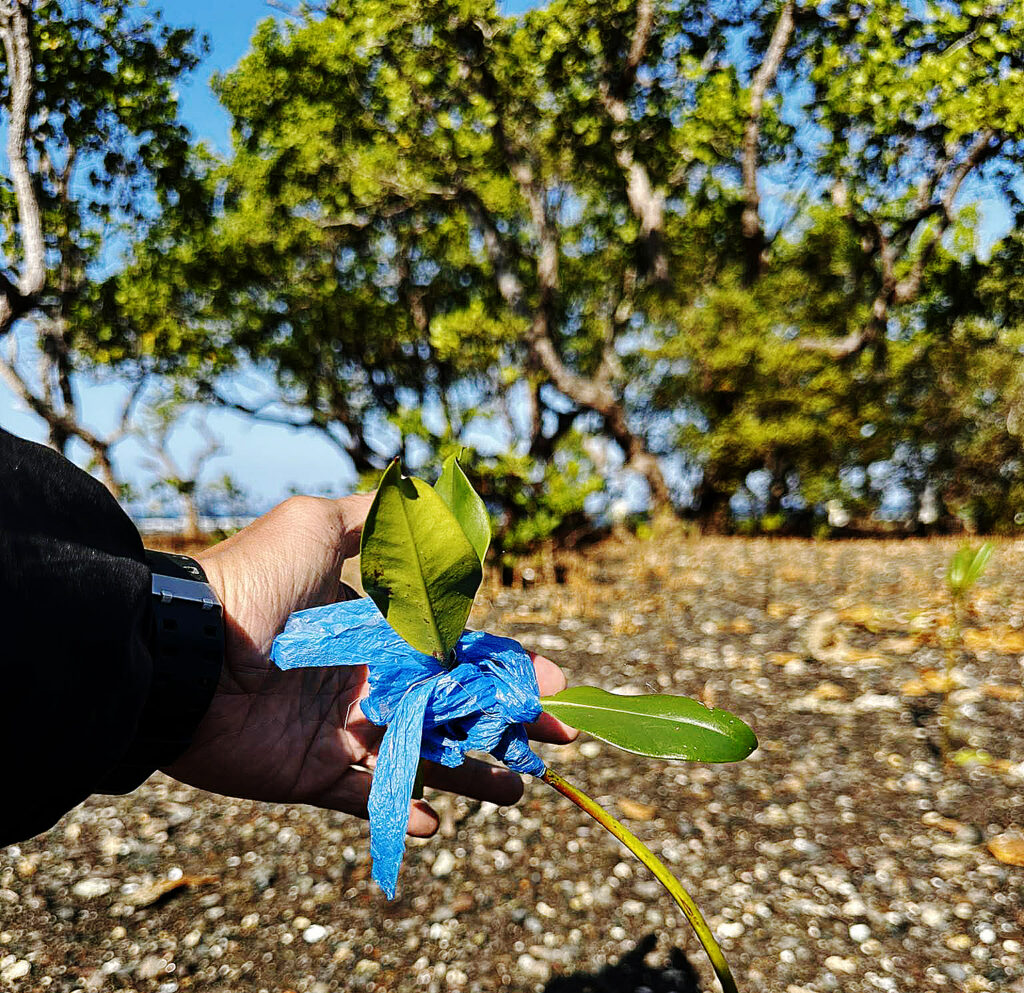
The good news is that we’ve delivered the first 10,000 Pagatpat seedlings to Guang guang to reforest the limestone areas. But there’s a downside here too: the city administration has paved the area in front of the building’s entrance with cement pavers. They’re in such poor condition that trucks aren’t allowed to drive over them. With the help of many volunteers, we had to unload the seedlings and bring them to our nursery, where they can recover from the stress of transport in the shade of the trees. It took three days of work, because it is currently so hot in Mati that we couldn’t work between 11 a.m. and 3 p.m. All the seedlings are now resting in the shade and are misted with seawater every morning and evening.calculation requires.