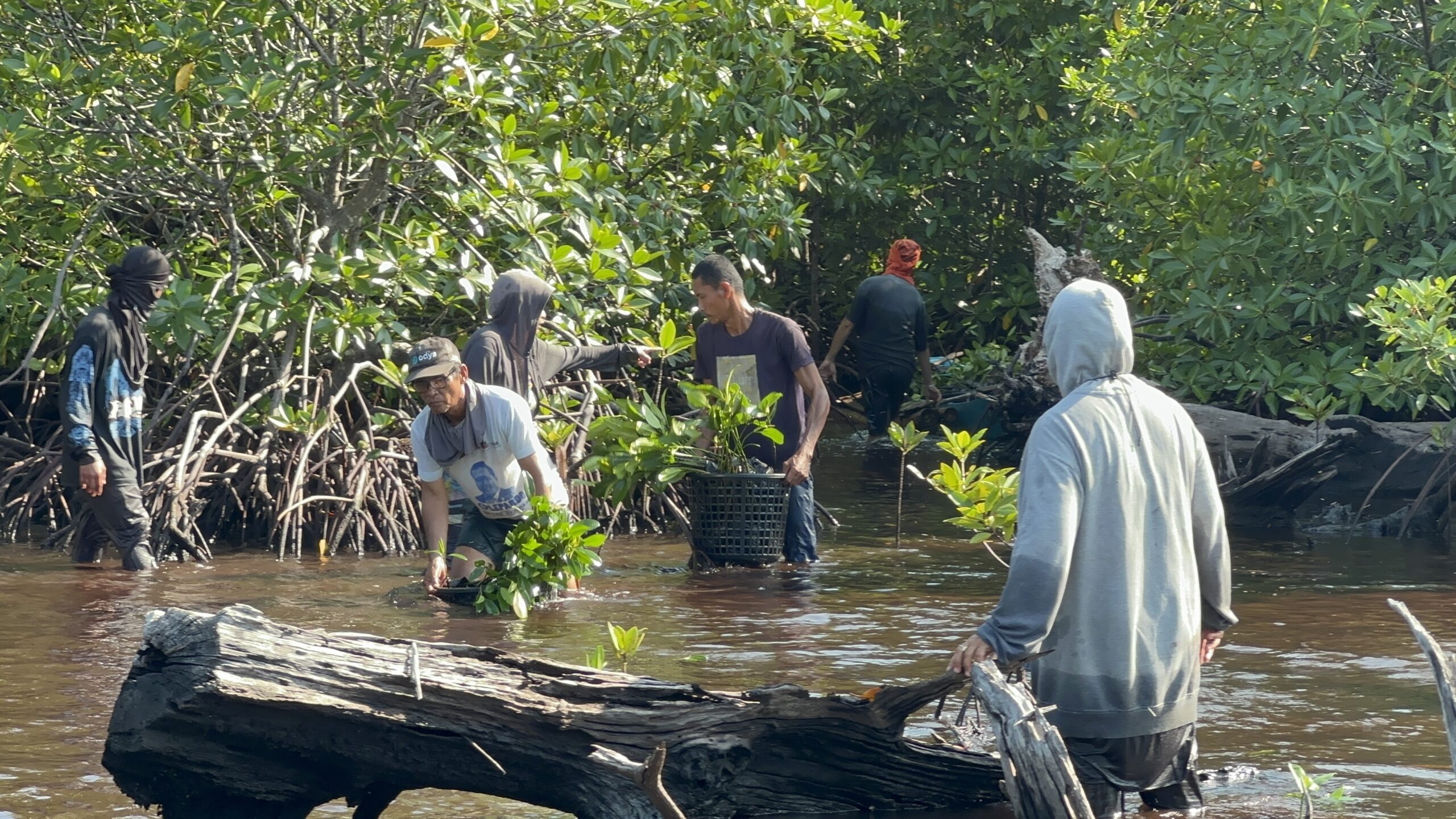
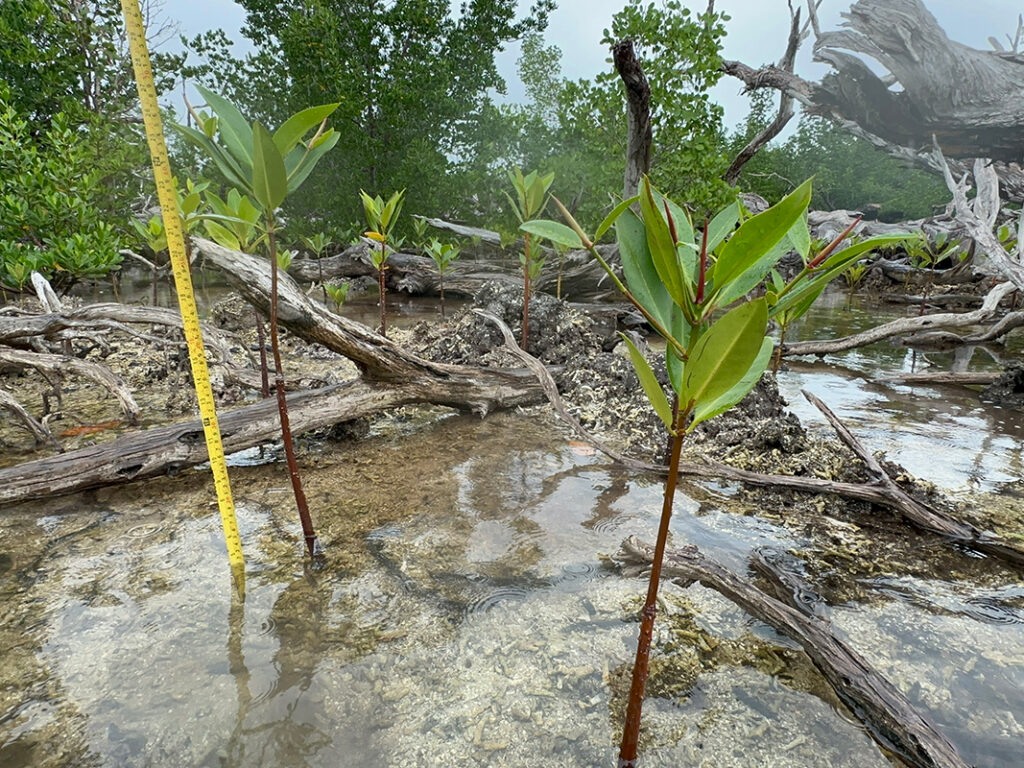
Before planting the mangroves, the planting bags are removed. We can usually reuse them two or three times.
Always Stay Flexible
The good news is that, as a small organization, we’re flexible and can adapt immediately when changes are unavoidable. The next batch of school chairs—which have already been ordered and manufactured—was originally scheduled for delivery in March 2026, but rising fuel prices have thrown a wrench in those plans. Everything was coordinated on our end, but since we need approval from the Department of Education, we have to go along with it. They are currently holding marathon sessions to discuss how fuel costs for teachers might be offset. Our delivery date is set for April 7, 2026, which is after Holy Week, a major observance for the Catholic Church and its members here in the Philippines.
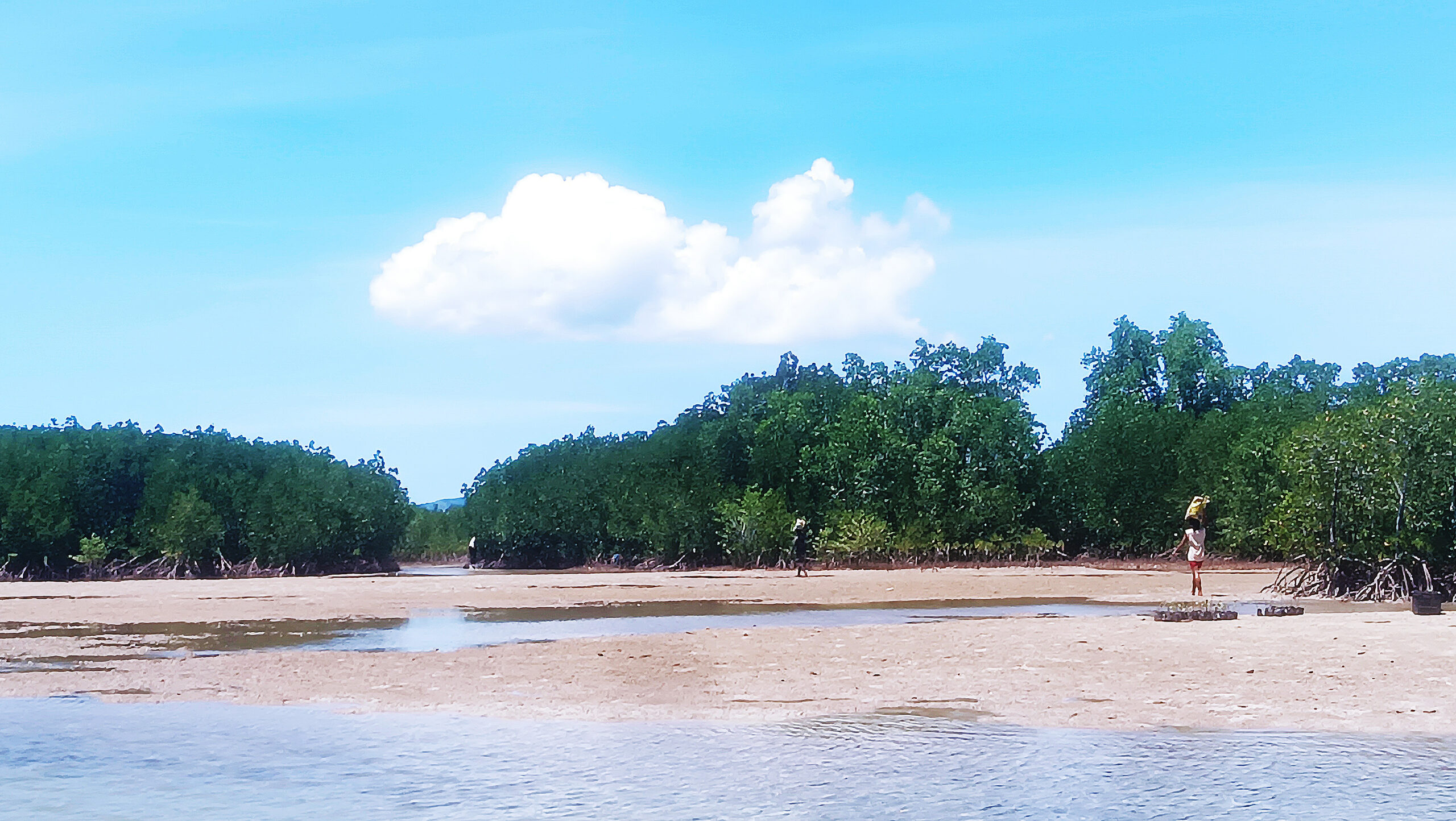
Our planting efforts along the coastal strip of Pujada Bay in Mati are now complete. All the land made available to us has been reforested with various species of mangroves. These trees will now grow and will bear seeds in five to seven years. In this way, the mangroves will reproduce naturally, without human intervention. Our goal has been achieved.
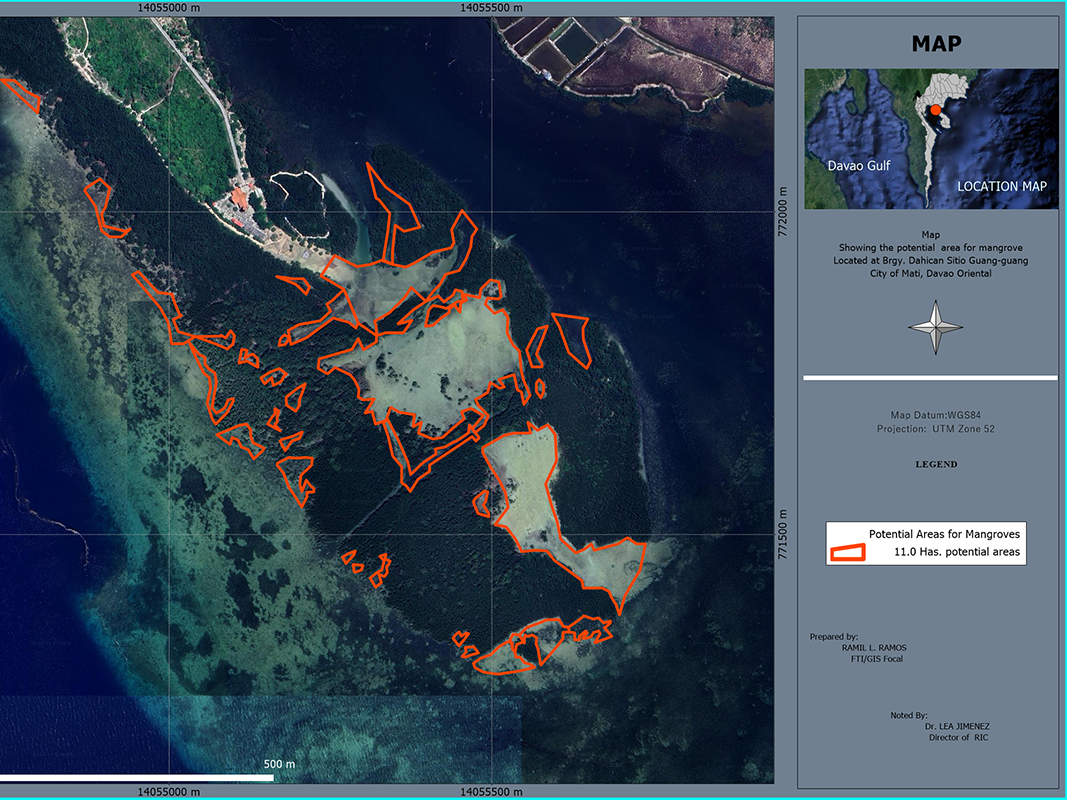

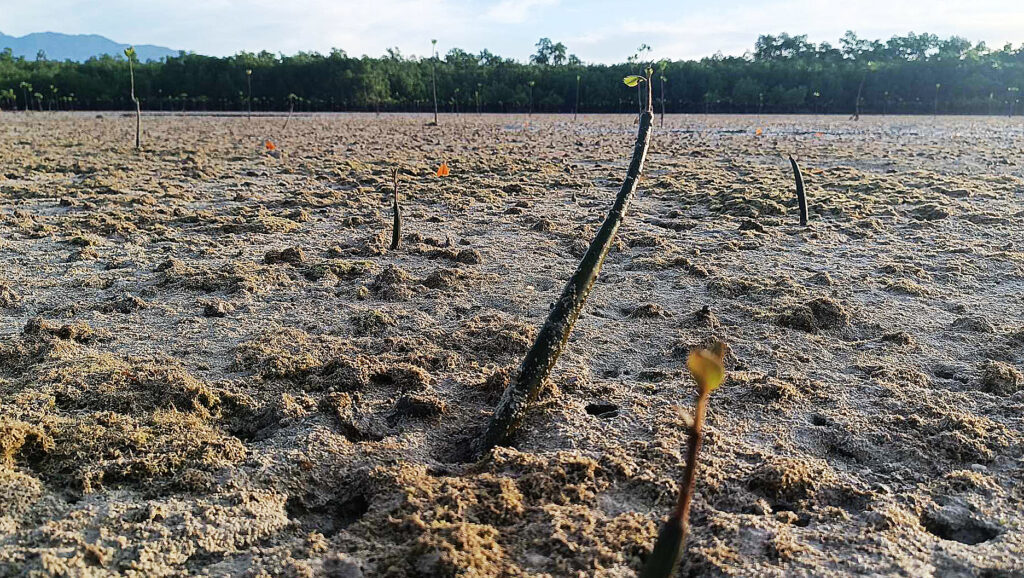
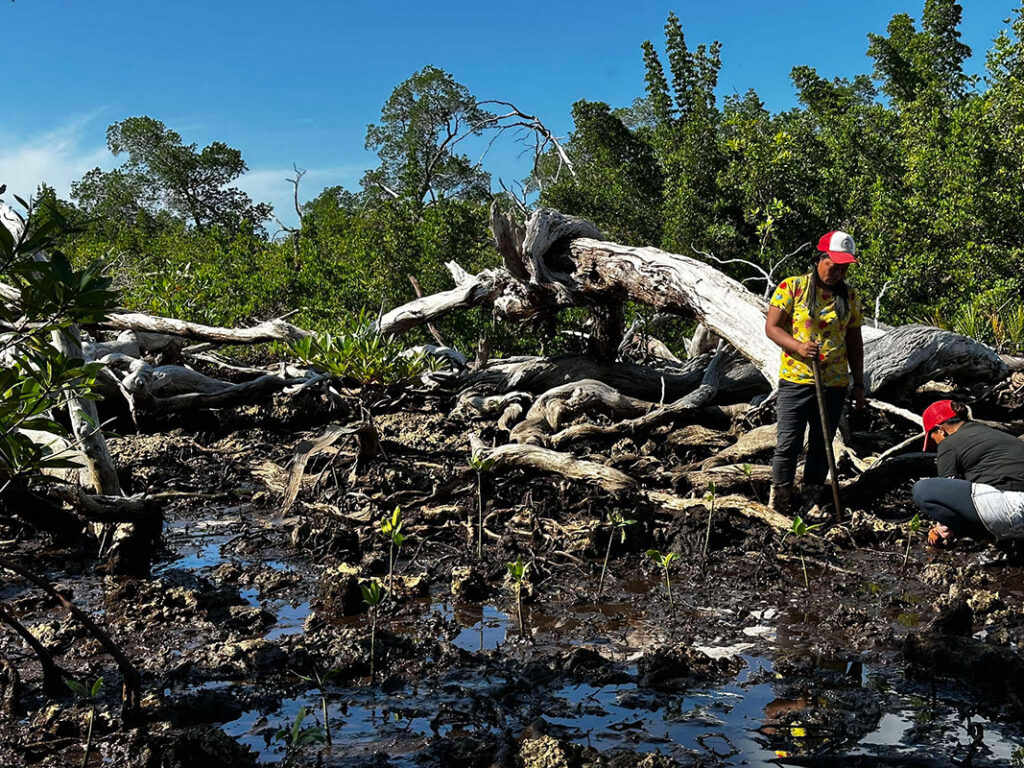
The final and most challenging task in Mati is the reforestation of the limestone areas on the Guang Guang Peninsula. We have reported on our approach several times in recent years. However, these plantings will transform barren limestone areas into a mangrove jungle. In this way, we can repair the damage caused by the deforestation of the mangroves decades ago. Countless visits to government offices were necessary to make this happen, as the limestone areas are located in a protected zone, which requires a special permit. For the reforestation, holes must be drilled into the limestone soil so that the roots of the mangrove seedlings can reach the underlying sediments. Our strategy is not to perforate the areas haphazardly, but to plant in a circular pattern toward the center, because the partially shaded edges of the open areas are softer than the central fields, which have been hardened by the scorching sun.
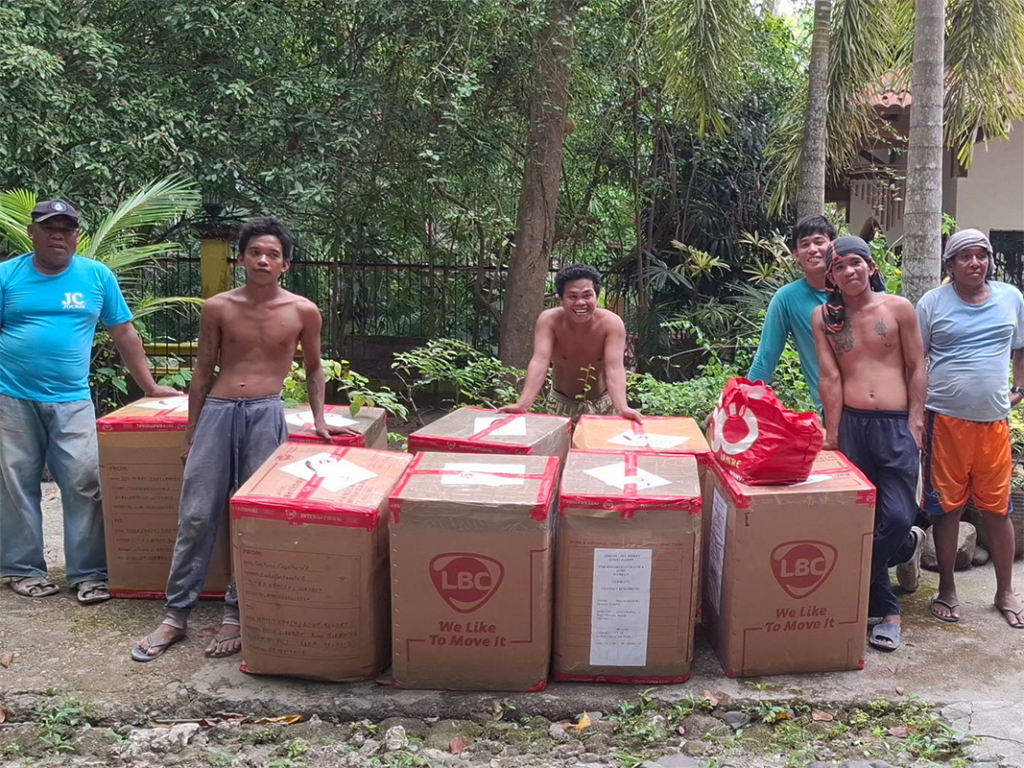
Since we will no longer be planting in the coastal regions of Pujada Bay in Mati, the women’s organizations that planted for us will receive medical supplies. We received a huge shipment through the organization “Interhelp” (Andreas Engelhardt) from Hamelin, Germany. The medical equipment is a donation; Mama Earth only had to cover the shipping costs. The sorting is currently being done by the professional fire department in Mati, which will pack the items into boxes to facilitate delivery and distribution. The two emergency response backpacks will remain there, and they are sure to make a big difference. It’s a small goodbye gift.
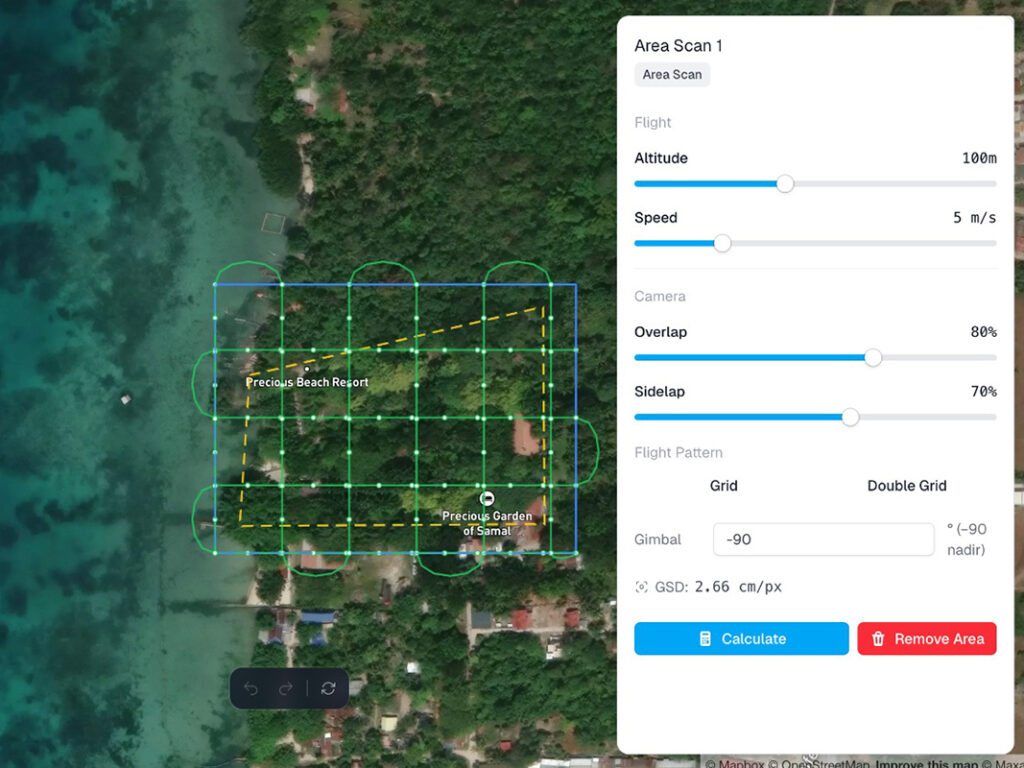
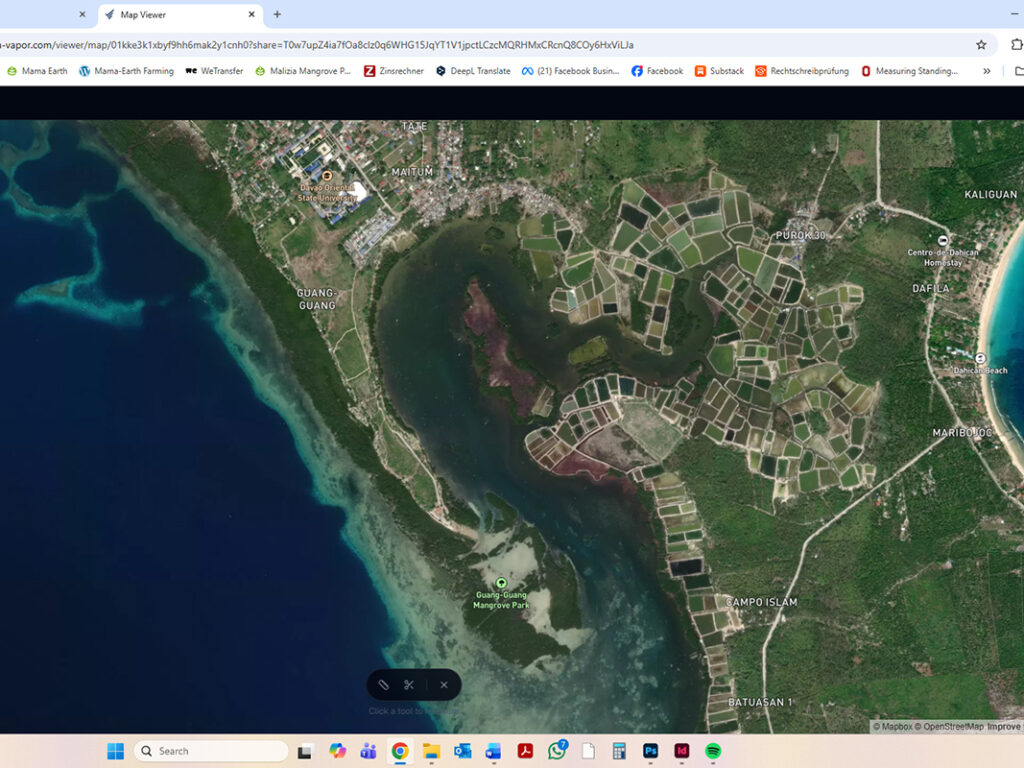
It’s incredible what Christian has programmed for us. Starting now, we can fly over the planted mangrove fields using predefined coordinates to document their growth from the air. Not with videos, but with high-quality photos. The advantage of this is that you can zoom in on the photos, which is nearly impossible with video footage without the resolution becoming blurry. By programming the drone flights ourselves, we don’t have to pay a fortune for updates. This not only saves a lot of money but also makes us more flexible. Another feature of the program saves time: the coordinates are set before the first flight. Hats off to this technology, which also provides 3D views because the photos are taken at a predetermined angle.
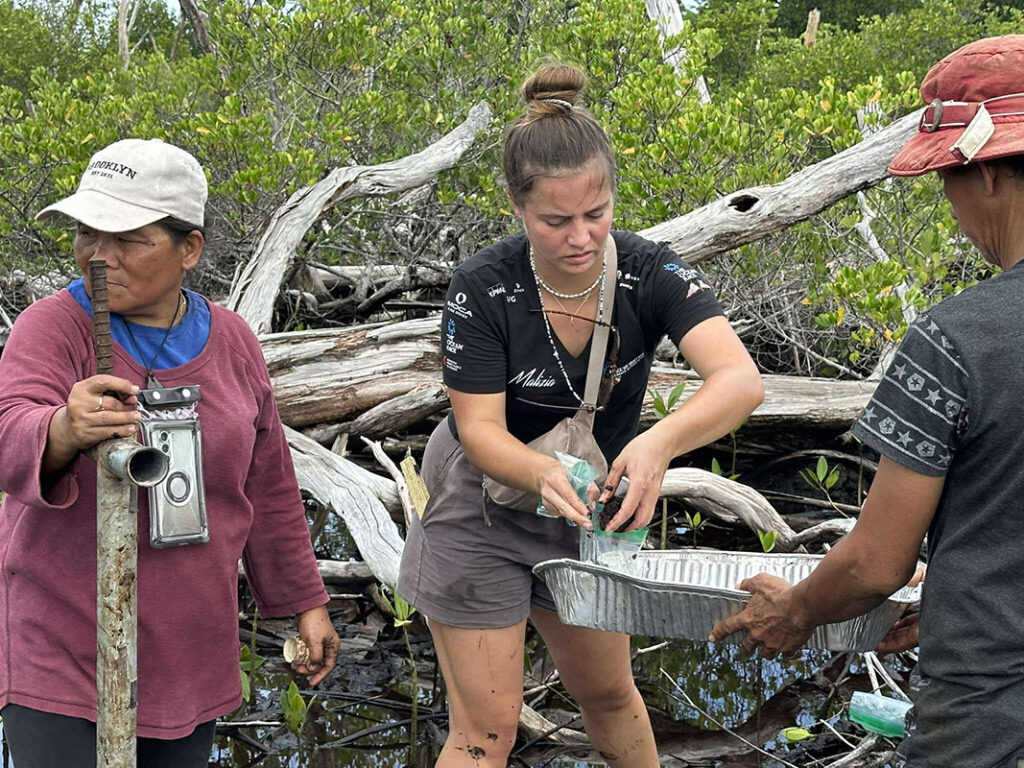
It’s also incredible what Chiara has accomplished in terms of establishing the facts about CO₂ sequestration by mangroves. As is well known, she spent two months on site here writing her master’s thesis and, as part of her research, analyzed a large amount of sediment in the laboratory at the University of Mati. It has been proven that mangroves make a significant contribution to CO₂ sequestration. There are many false figures circulating online regarding the sequestration of kilograms or tons. Here, the desire to please likely took precedence over the facts. The incorrect figures go as high as 40 kilograms per mangrove per year. That is utter nonsense. We estimate 5 kilograms per year, assuming a lifespan of 25 years for the mangroves. We know that the estimates for CO2 sequestration and the lifespan of mangroves are set too low, but we do not want to lull ourselves into a false sense of security that could lead to a rude awakening. Our figures are reliable, as a sound calculation requires.