The summer heat wave in the Philippines is subsiding. The heat is becoming a little more bearable.
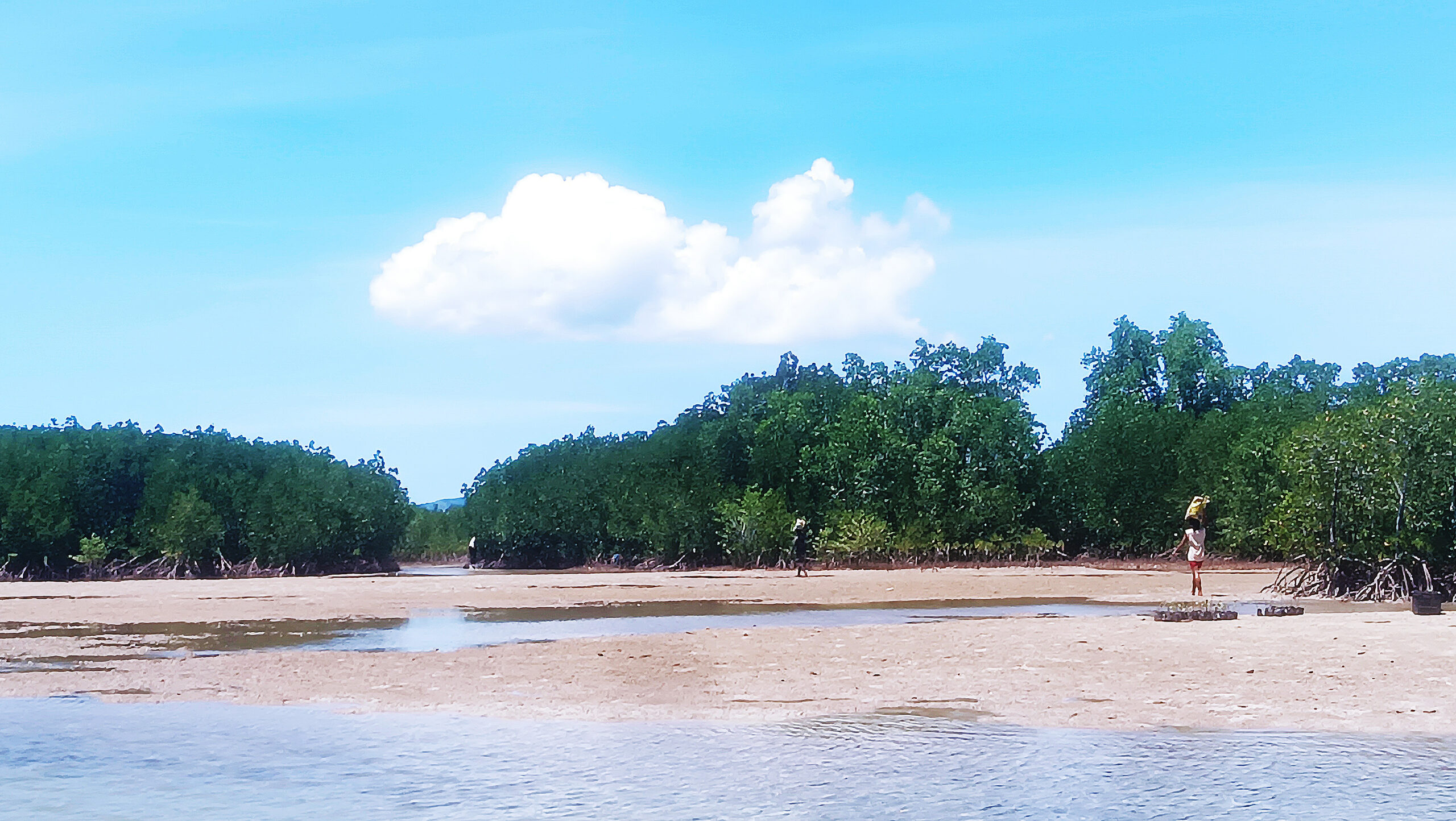
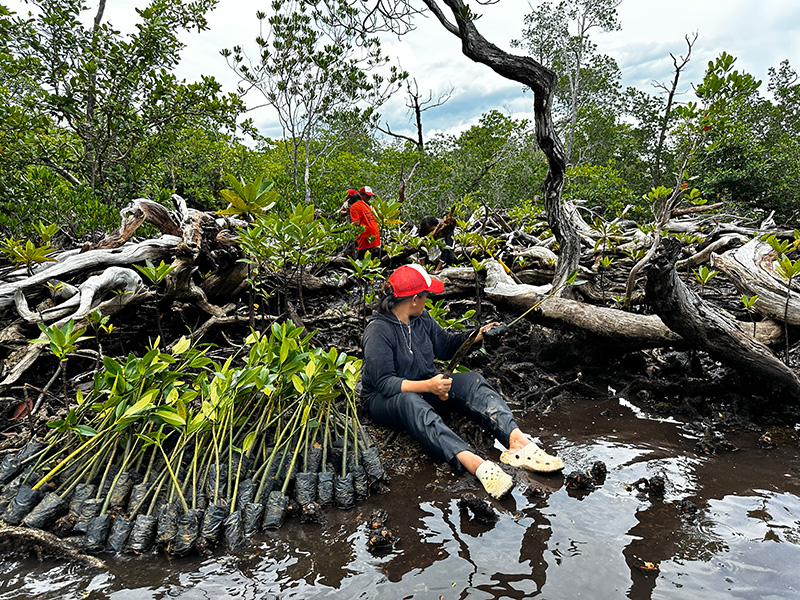
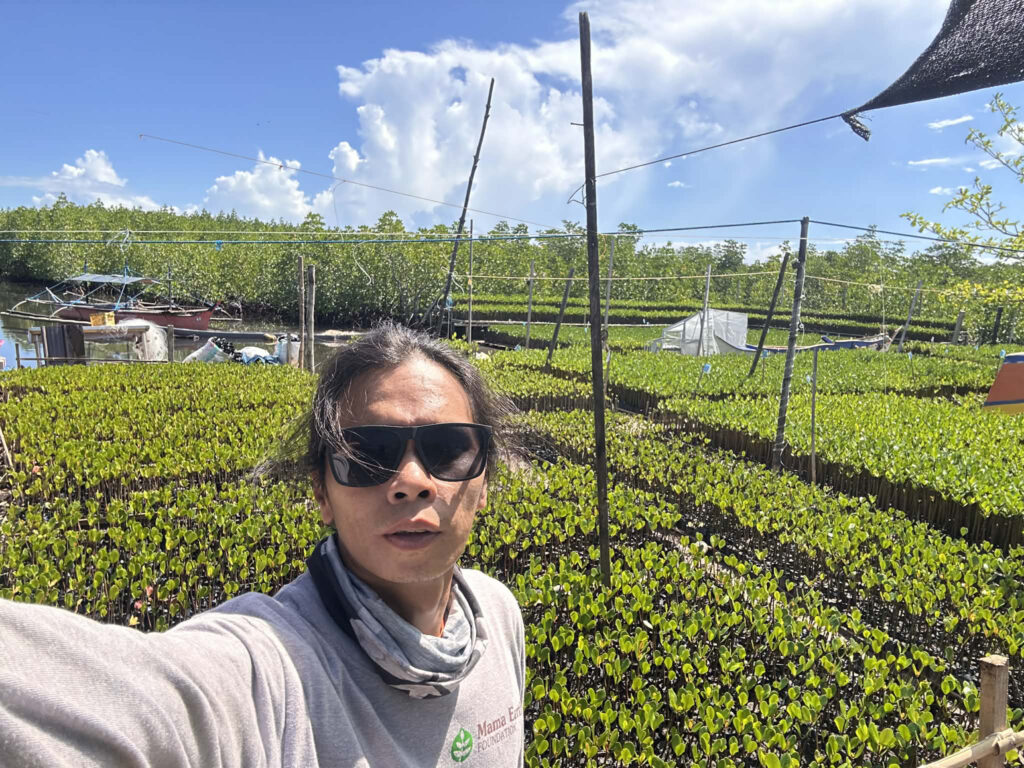
It has been a turbulent and eventful time since the last progress report. We’ve been involved in a wide variety of activities. Fortunately, our mangrove planting projects are progressing well. We are now planting in Mati and Baganga, both of which are located in Davao Oriental. In Mati, the three limestone areas in Guang guang are being reforested in a ring-shaped pattern toward the center. We have reported on this system several times already. It is the most promising approach, as the first pioneer mangroves grow in the slightly softer, semi-shaded areas of the limestone surface and provide additional shade to prevent the limestone from further eroding. These plantings are extremely labor-intensive, but they demonstrate that it is possible to heal wounds in nature. Because the project is so unique, it is being monitored and documented by the university in Mati. We are all in this together: the university, the DENR, the Protected Area Management Board, and you, as a donor to this initiative, which is likely unique worldwide.
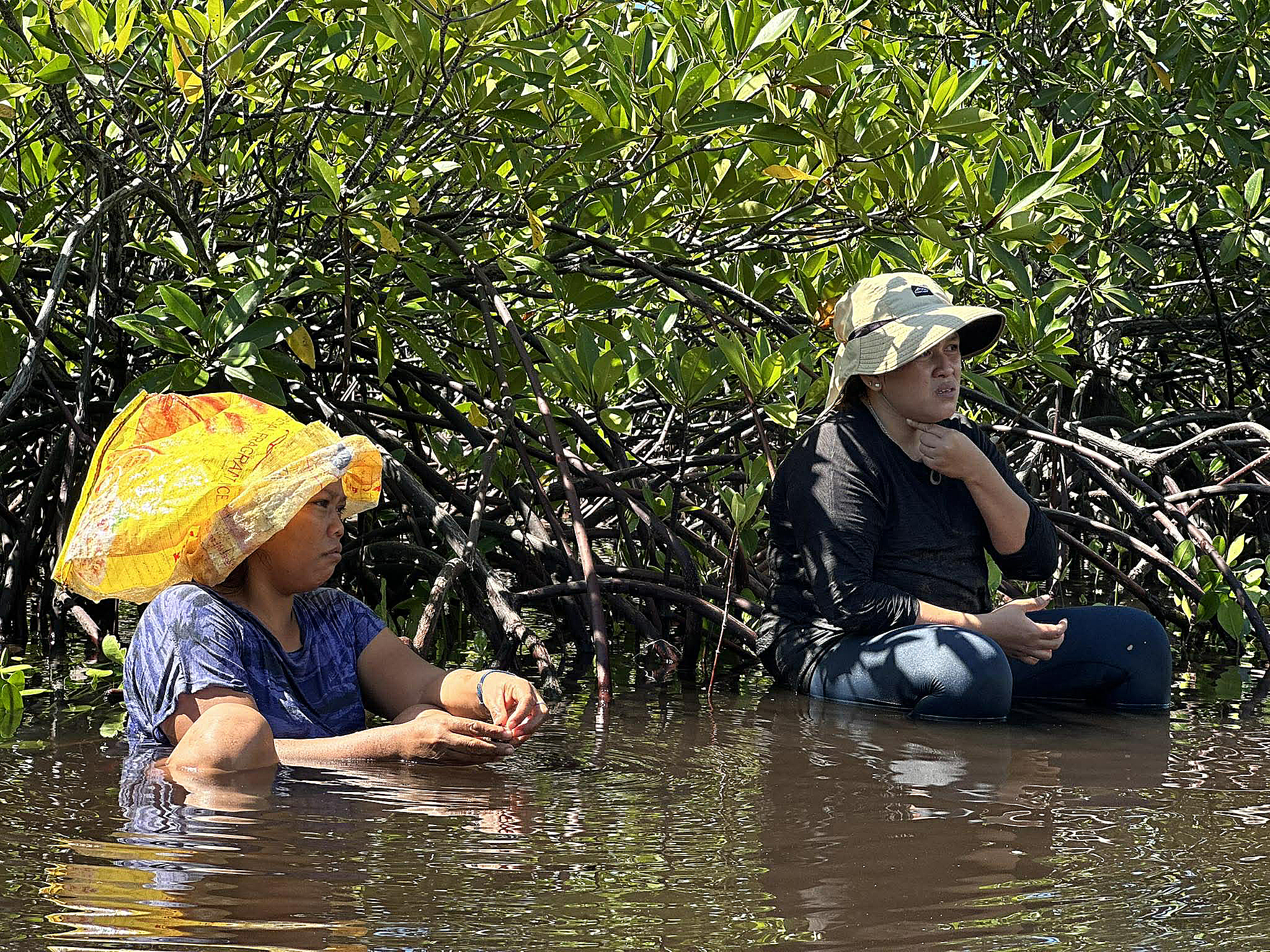
In Baganga, we are slowly making our way north. Our tree nursery on Poo Island, in Barangay Kinablangan, Baganga, is truly something special. This lively community of 1,500 residents, which transports the seedlings to the planting sites by boat, also runs a small seaweed farm. The fresh seaweed is sold at the market and to restaurants, while the unsold seaweed is dried.
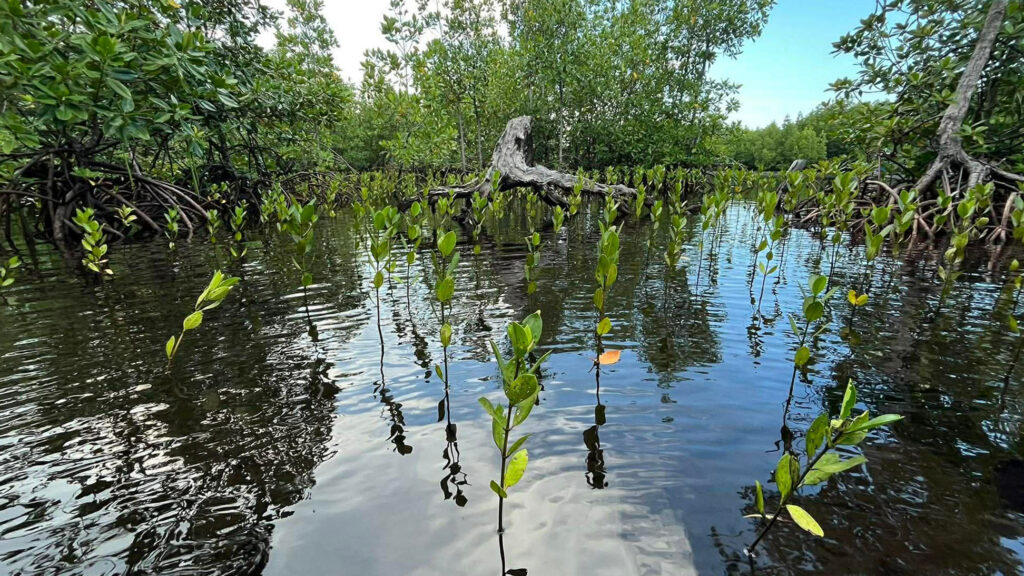
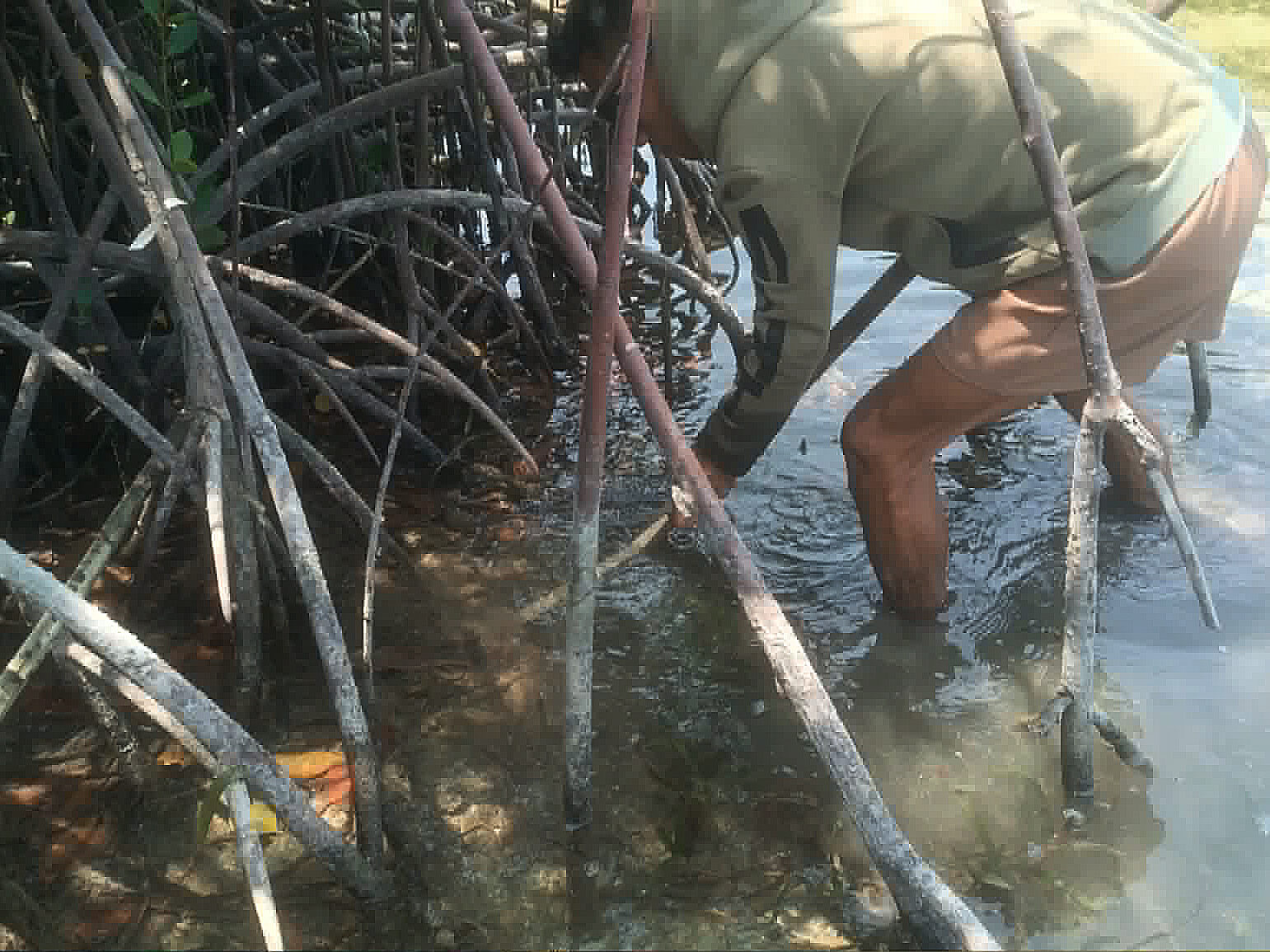
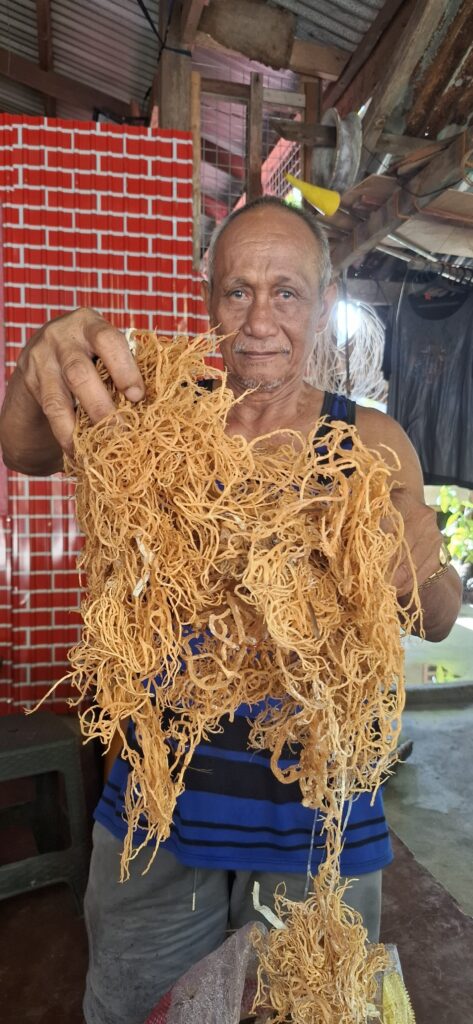
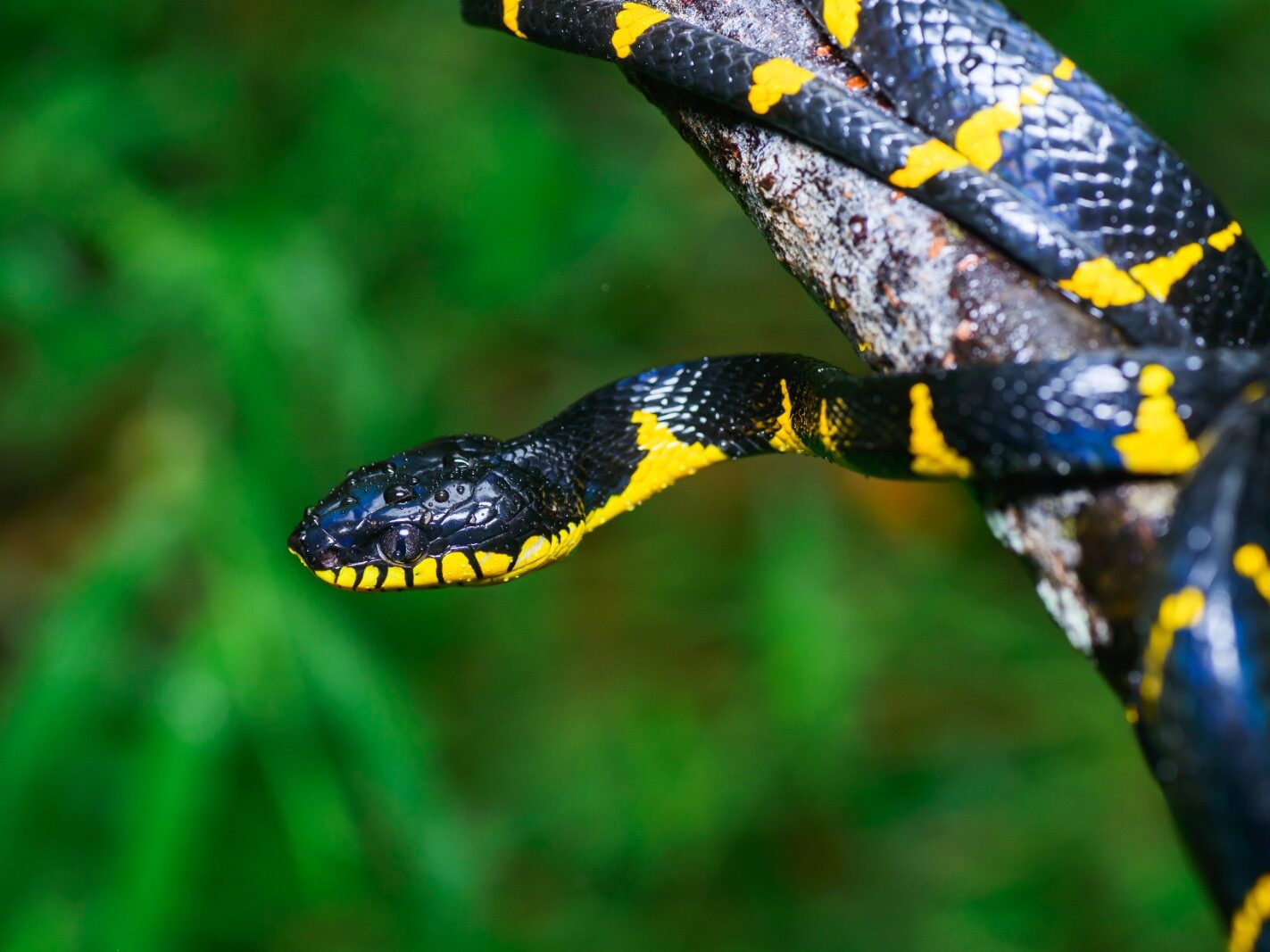
From left: Initial ring plantings on the limestone area in Guang guang. Algae farmers on Poo Island in Baganga. The first mangrove snake (Boiga dendrophila latifasciata) has been spotted again in Baganga. We need to plant even faster to create more habitat for animals.
Once the salt has been washed out of the dried seaweed, it can be used as fertilizer. However, there is now also a buyer who uses the dried seaweed to make “plastic.” This is such a forward-thinking idea that we spontaneously decided to launch another small seaweed farm as a project. So, in addition to the nipa palms, we have another project to provide a long-term source of income for the local people. This palm species is the perfect companion for mangroves and provides residents with additional income. The leaves are tied onto bamboo strips and are highly sought after in local communities as roofing material. Additionally, nipa palms form a “wall” on the landward side that holds back the muddy soil. The long-term perspective is important, because we keep moving on when there are no more planting areas available.
Good news has come from Baganga: the first sighting of the mangrove snake (Boiga dendrophila latifasciata) has been documented in the Baganga Mangrove Swamp Forest Reserve (BMSFR). The moderately venomous snake was found resting on a Bakhaw-Laki mangrove (Rhizophora apiculata). We need to plant faster to create more habitat for native wildlife.
The medical supplies donated by Interhelp e.V. in Hamelin, Germany, have now been distributed to the villages around Pujada Bay. We had to hire help to sort through the many boxes and distribute the supplies fairly. In the villages where our planting projects are nearly complete, these supplies are a great help to the first-aid stations.
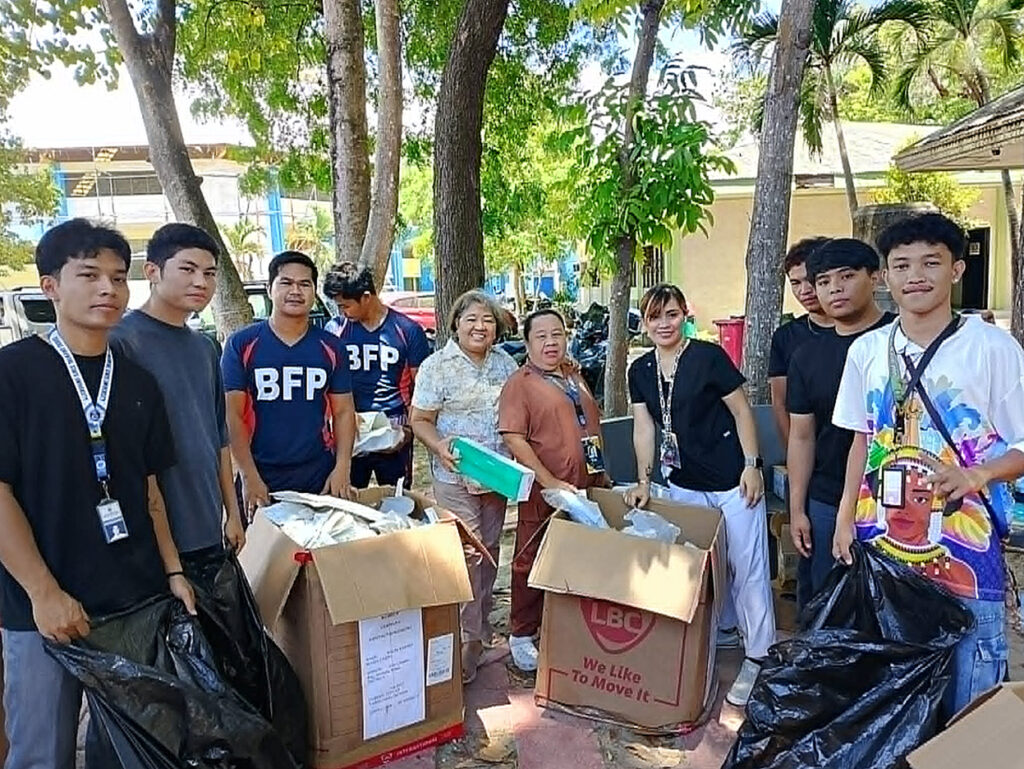
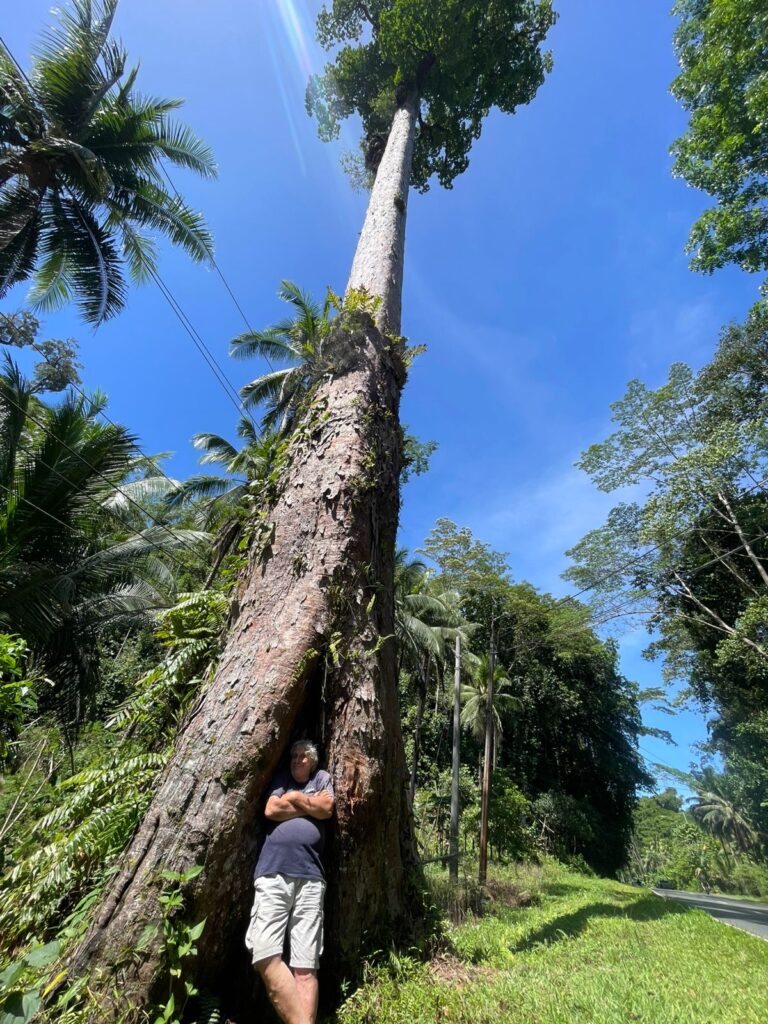
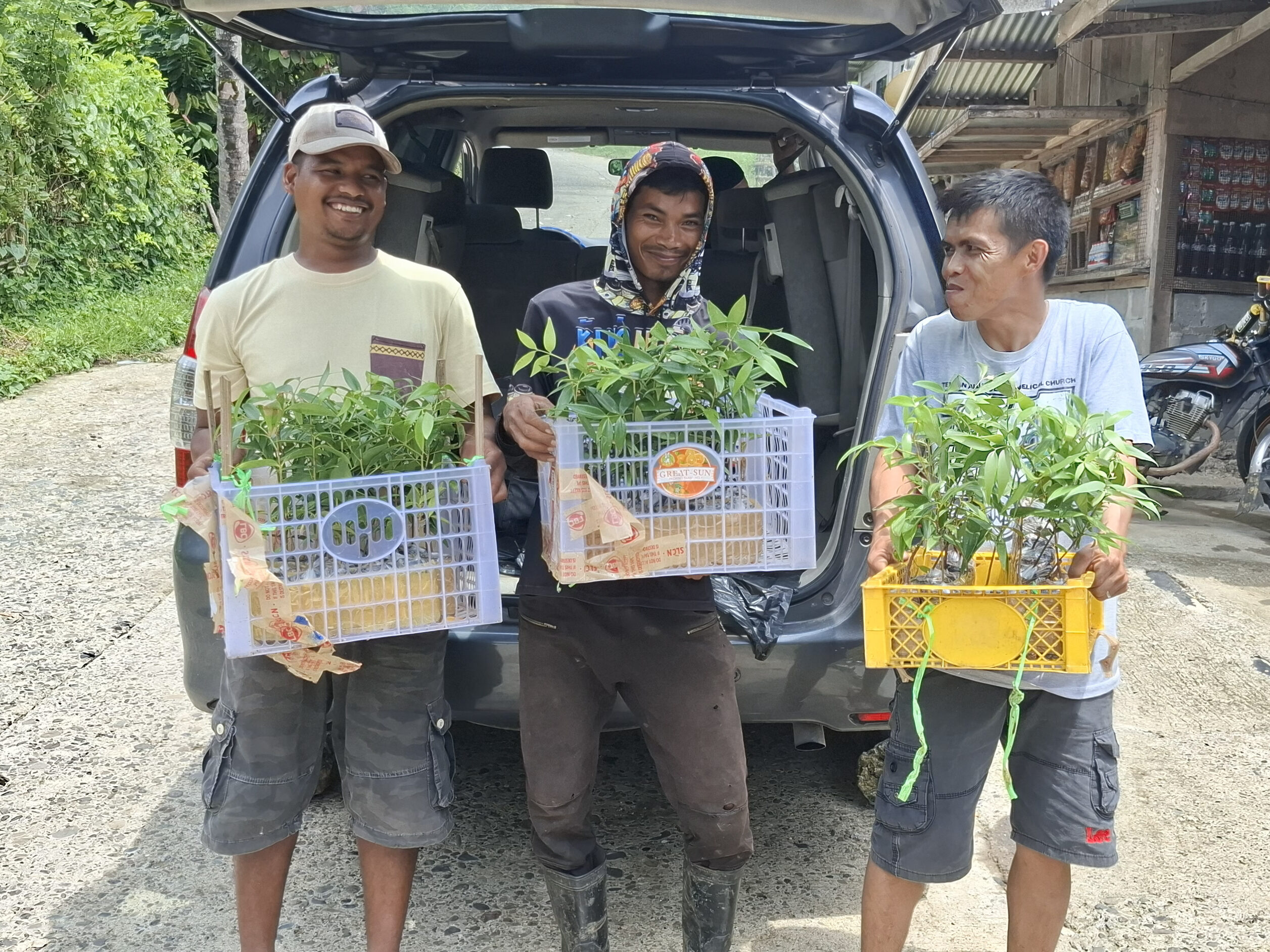
From left: Many helping hands at the university working to fairly distribute the medical equipment donated by Interhelp e.V. in Hamelin. A Toog tree approximately 150 years old. It has another 100 years ahead of it. A tremendous success: The first 50 Almaciga saplings are in Patagonia. They can grow up to 65 meters tall and are known as the kings of the forest.
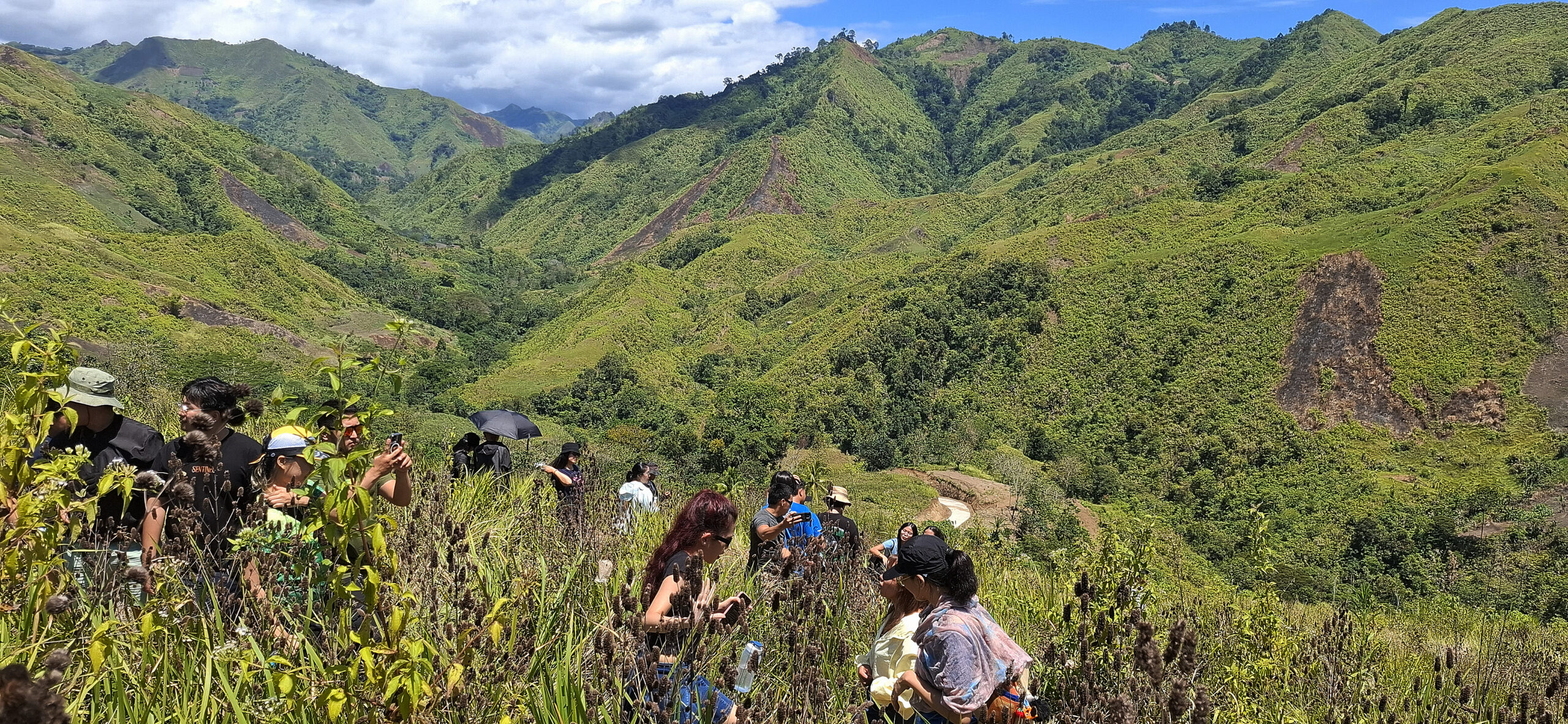
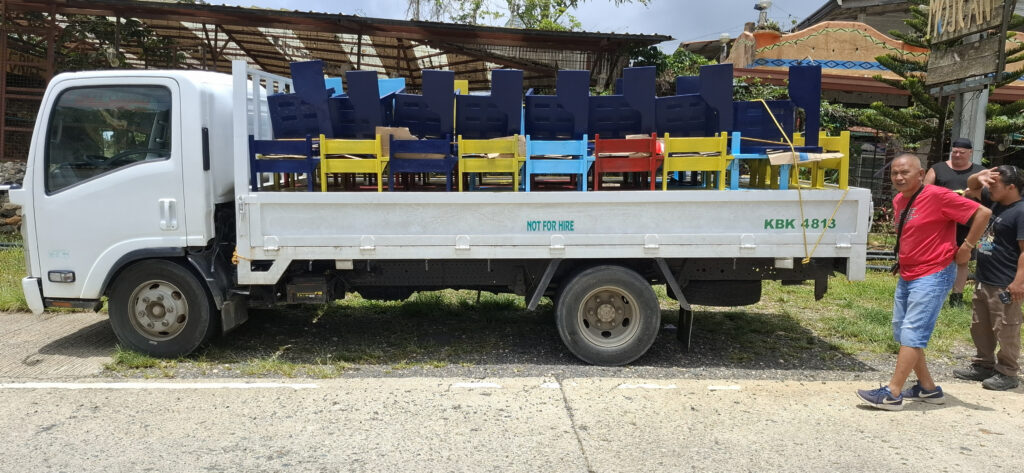
Although the children are still on summer break, we’ve already taken the school chairs up to the mountains. The parents will then bring them into the classrooms on the first day of school.
After what felt like 100 text messages and countless phone calls, we finally managed to get some Almaciga seedlings. It was incredibly complicated and tedious, but there’s a nursery on Palawan that sold us some. The first 50 are now in our small nursery in the mountains. As we’ve already mentioned, we’re going to replant these kings of the forest, because they’re on the Red List and could otherwise go extinct soon. We’ll be selling these, as well as the giant Toog trees, through sponsorship programs. It’s still too early for the Almaciga trees, but if you’d like to adopt a Toog tree as a family tree, we can help you with that. The Toog trees cost 100 euros and are growing in Montevista, Davao de Oro. Of the 104 trees growing there, over 60 are still available.
And nothing negative? Actually, yes. The drone pilot crashed our drone. The landing in the lake water really took a toll on the delicate electronics. It’s now at the DJI service center in Manila, and hopefully it can be repaired.