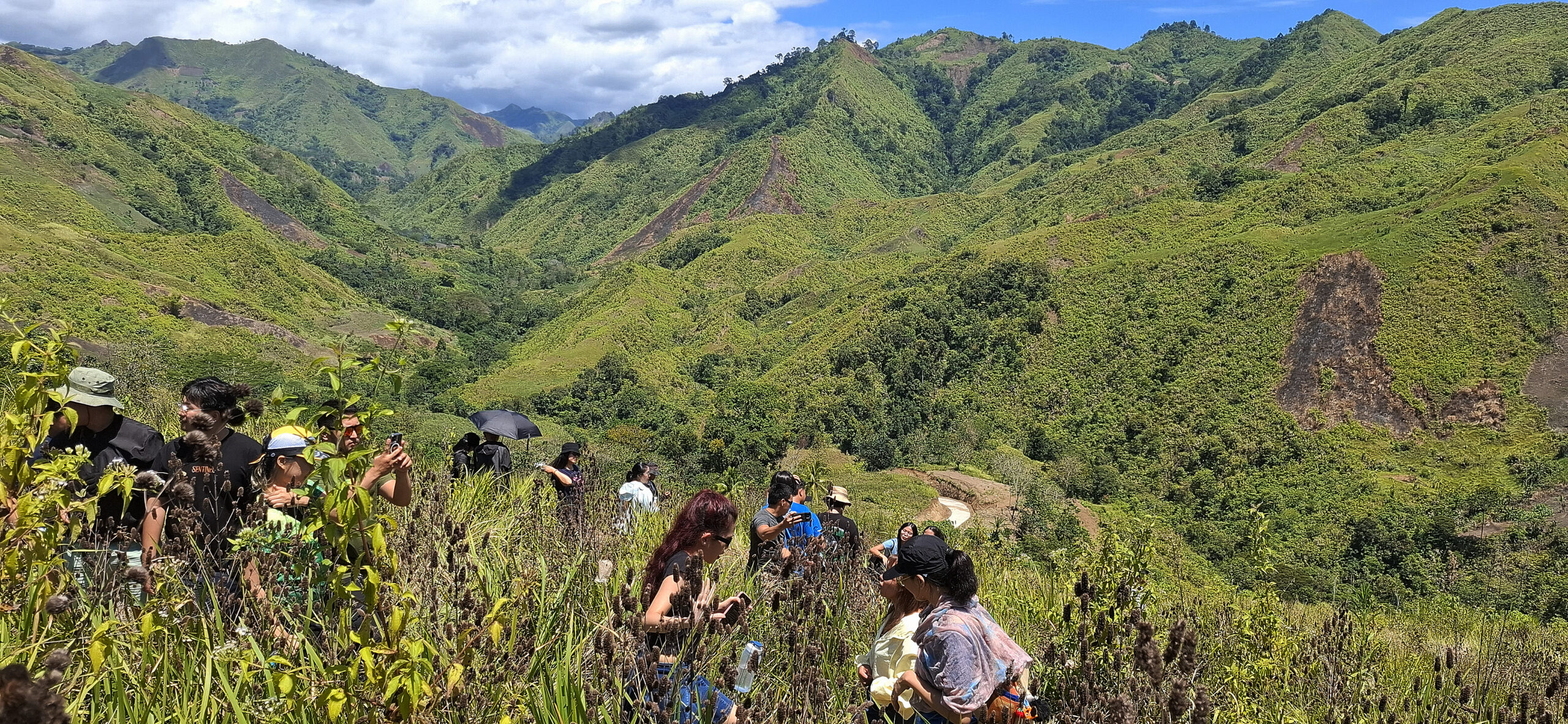
Reforestation is not currently possible in the mountains. South-East Asia could continue to suffer from a lack of rain, and the young saplings would not be able to survive without it. The photograph shows our challenging reforestation work on Mundo Hill many years ago.
As you know, we do not send out a newsletter in July, as most of our readers are on their well-deserved holidays at that time, often in places with limited internet access – which is good for the soul and helps you to relax. My personal tip for deep relaxation: give a tree a hug.
Here in Mindanao, there are almost no interruptions for Mother Earth. Life goes on, even if the heatwave that has persisted since the middle of the year has at times made working impossible, or at least restricted it. Climate authorities warn that Pacific El Niño conditions could develop into a ‘super’ El Niño, which is not expected to subside until the first half of 2027. Not a promising outlook. However, there have been occasional light showers from time to time, and at times even heavy tropical rain, though this has only been enough to bring some relief to nature.
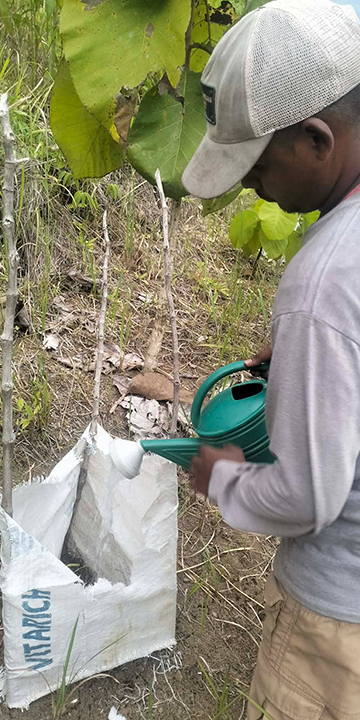
We need to water the rare Almaciga seedlings to prevent them from succumbing to the heat.
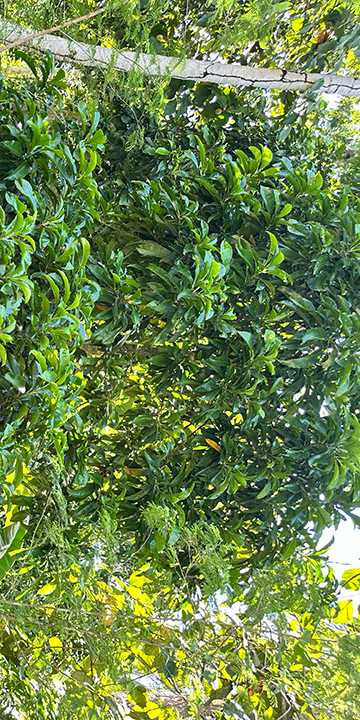
This Toog tree no longer needs human help. It will continue to thrive in all its splendour for the next 200 years.
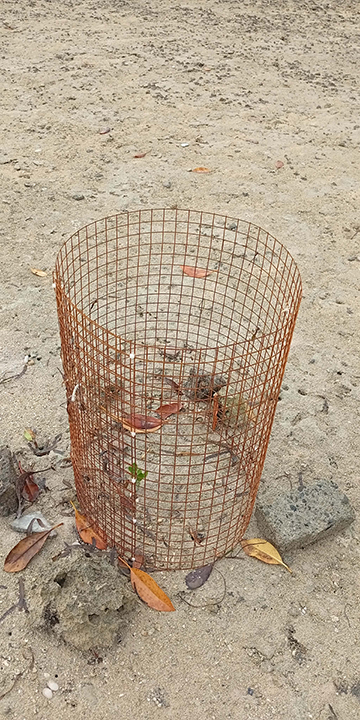
The Pagatpat seedlings need to be protected by cages so that they are not trampled on by visitors in Guang guang.
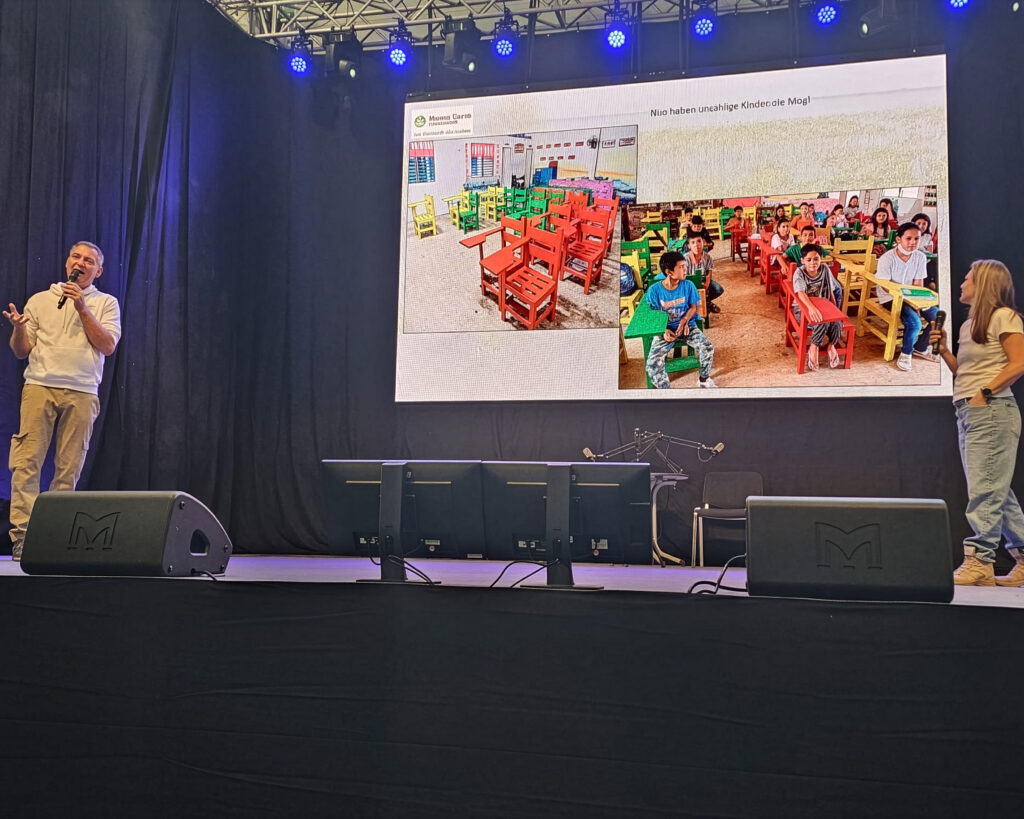
The ambassador for school chairs made from plastic waste. Here, Gerald Nowack is on stage during the diving fair in Friedrichshafen on Lake Constance.
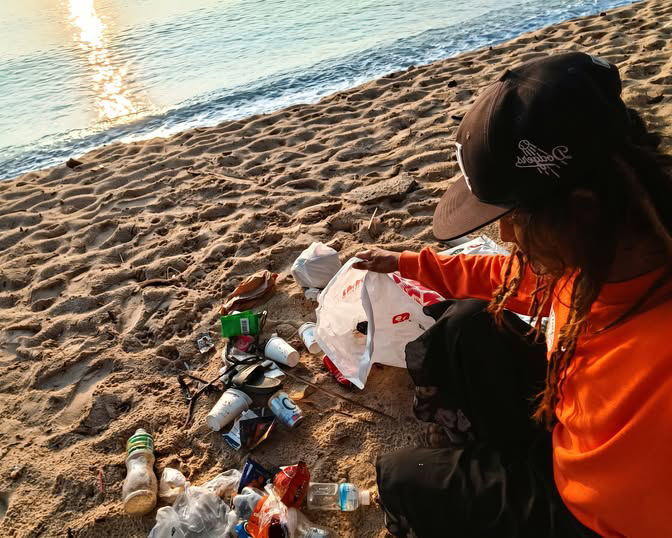
The never-ending story. Every day, the Amihan Brothers in Mati clear the rubbish from the beach to make it easier for the turtles to lay their eggs there.
Even those staying in the shade won’t be able to escape the heat, as even the air has reached temperatures at midday that offer no relief. What is a delight for beach holidaymakers is a burden for those at work. As we all know, our solution is trees.
They are now being planted in vast numbers all over the world. The scale of reforestation is unimaginable: we’re talking billions. It’s almost impossible to tally up all these projects. Nowadays, seeds are even being dropped by drones, seedlings planted by robots, and hundreds of thousands of people are hard at work planting trees. Every conceivable measure is being taken to help more trees grow on our planet. This is to be welcomed and is very encouraging. The alarming aspect of these reforestation efforts becomes apparent when we look at deforestation from the other side. We must admit that, for many centuries, we have been thoughtlessly cutting down forests without a thought for the future. This must not be allowed to happen again.
It is sad that we are losing so many primary forests. All tree-planting schemes are undoubtedly helpful, but trees do not yet make a forest. That takes time. There is no doubt that healthy forests teeming with biodiversity can develop once again. To achieve this, however, we must give the planted trees time. 500 years will not be enough; I would suggest 1,000 years. But who can guarantee that we will leave the trees undisturbed for that long? My proposal that trees over 100 years old must be placed under nature conservation protection without the possibility of appeal is becoming increasingly urgent.
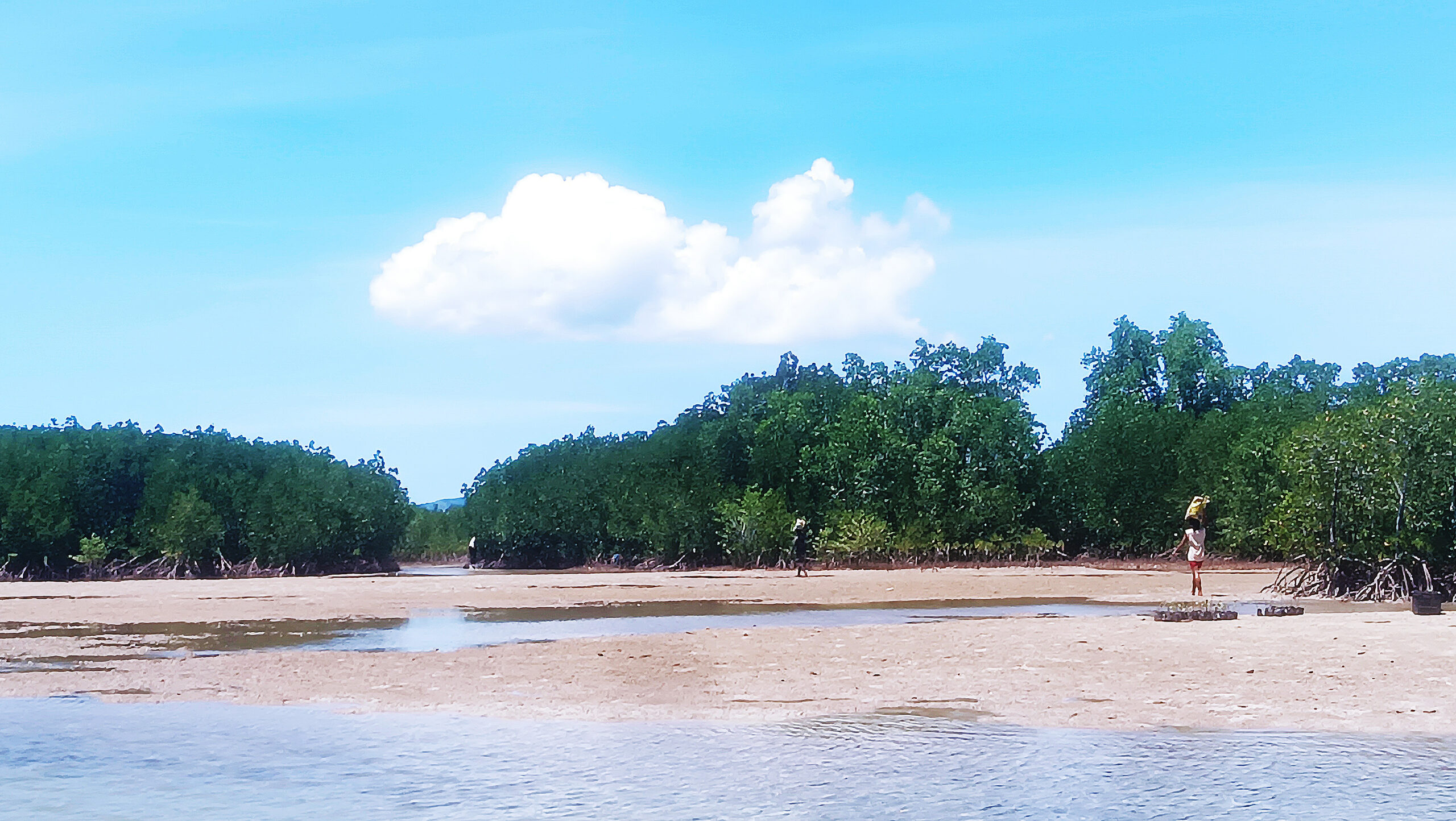
However, the large-scale reforestation programmes must not obscure the fact that the rapid rate of deforestation has not yet been halted. Every year, 13 million hectares of forest still fall victim to chainsaws. Reliable studies even suggest that we could lose a further 170 million hectares of forest in the coming years. Only then might a change in thinking begin, even though the reasons are well known: the expansion of agriculture is directly linked to the disappearance of forests. As we cannot plant trees in the mountains due to the dry conditions, we are working flat out to reforest more mangrove areas.
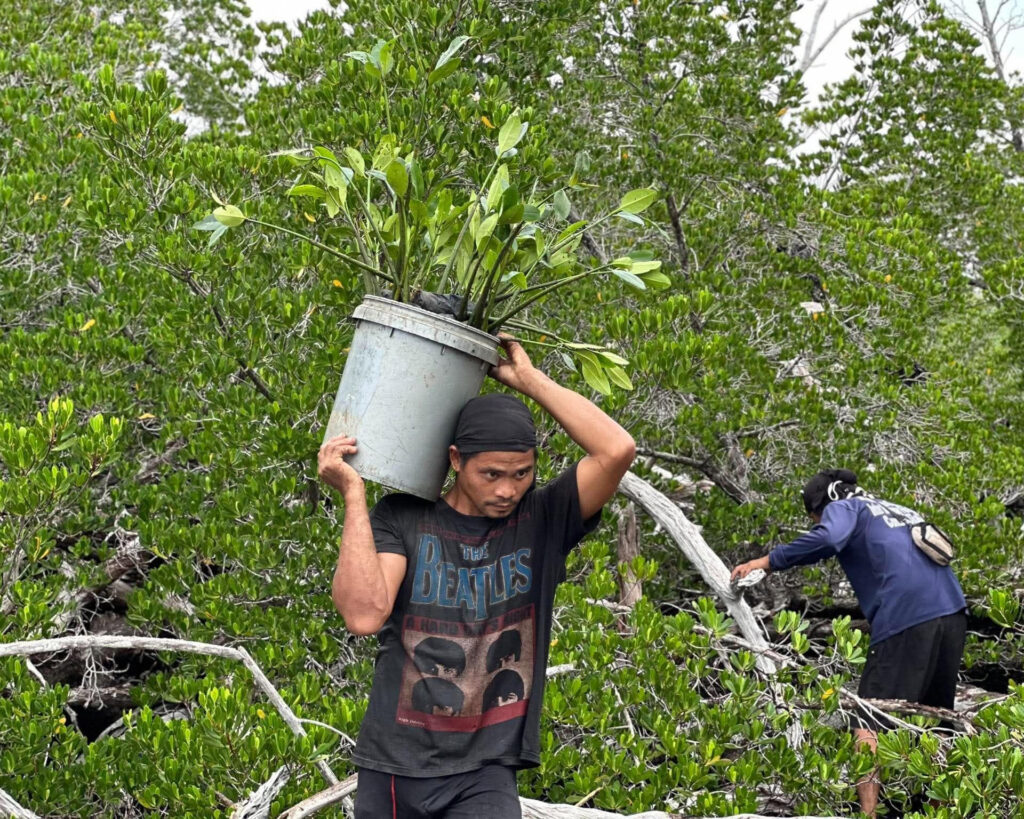
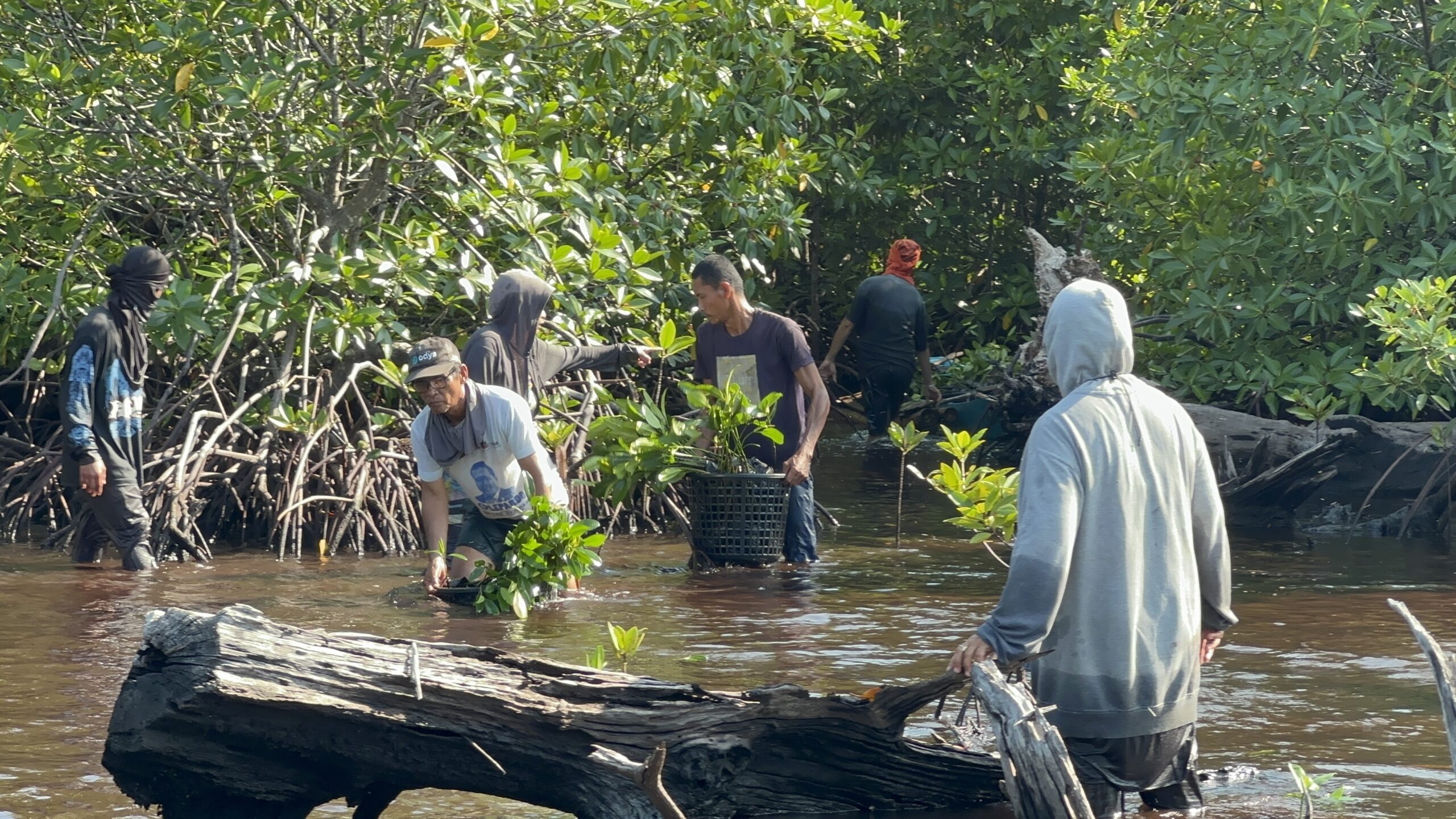
We are currently planting over 100,000 mangroves a month.
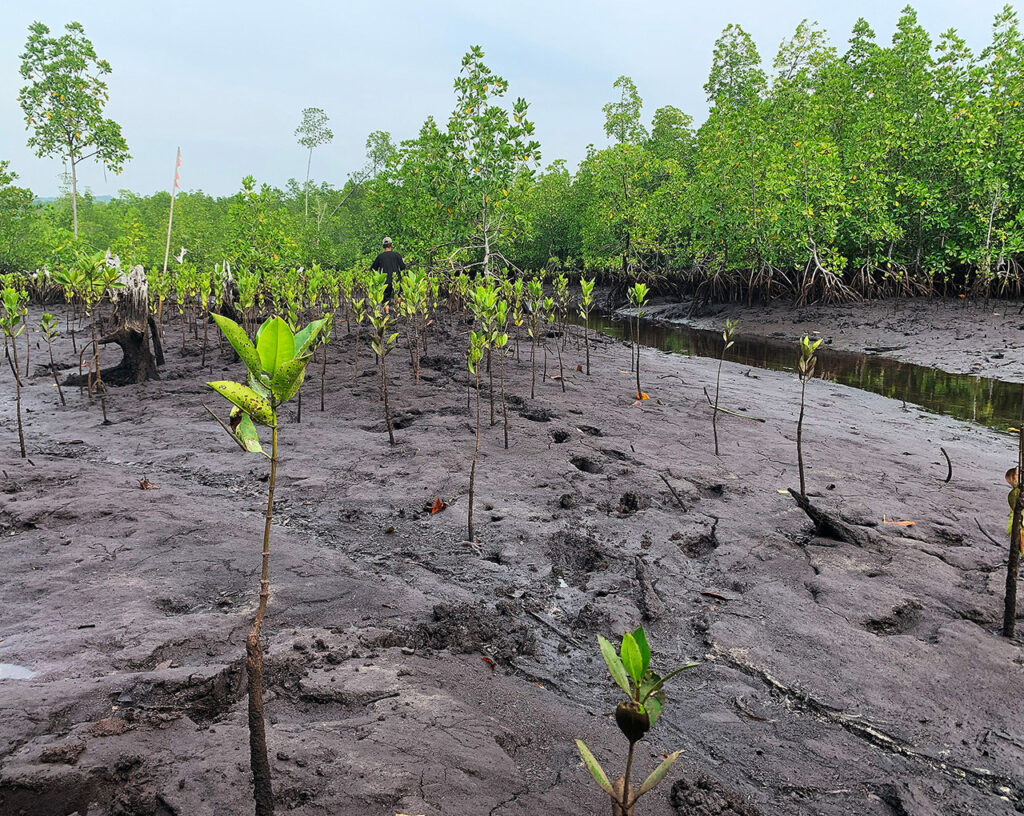
A number of mangrove seedlings have failed to take root here.
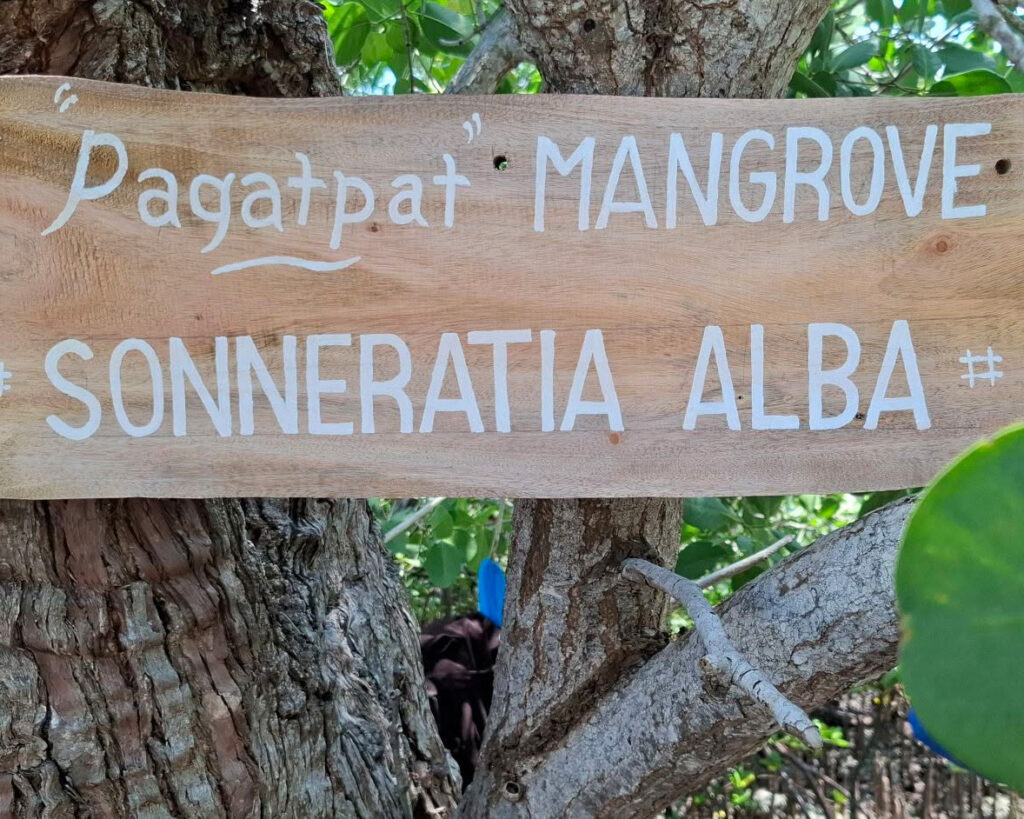
This is what our handcrafted wooden signs for the mangrove nature trail in Guang guang look like.
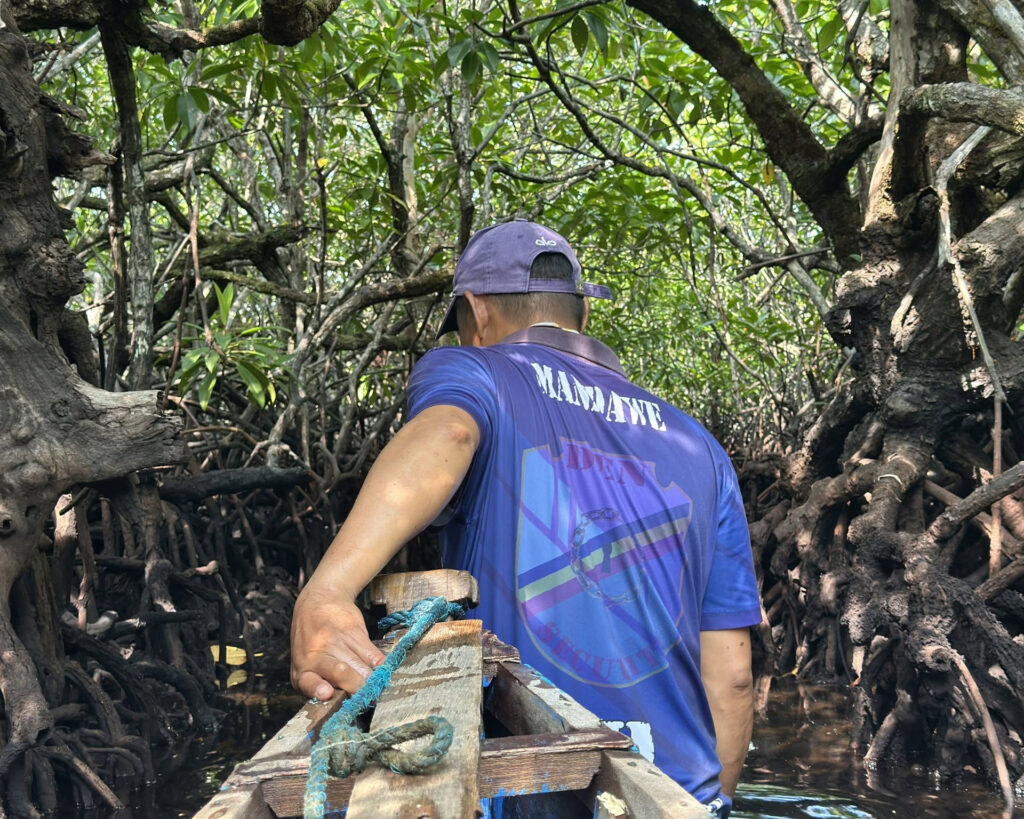
To reach the offshore planting sites, the boats have to be towed through narrow waterways.
We’re making remarkably good progress because the visible success of our planting efforts is also inspiring our planters. The released seedlings are growing impressively well. Whenever we see the mangroves planted years ago in Mati or Baganga during our inspection trips, we never cease to be amazed. Although most of the mangroves clearly demonstrate how well our planters are doing their work, we do have to contend with some losses. Setbacks – that is, losses caused by fishing boats, driftwood, plastic and marine litter – are something we have to accept.
We have stepped up our litter-picking campaigns with the Amihan Brothers in Mati. Unfortunately, there has not yet been a change of heart amongst visitors to Dahican Beach in Mati. Litter is still being left behind on the beach. However, this must be cleared away to ensure the turtles have unobstructed access to the beach at night to lay their eggs. An example? Over a three-week period, 150 kilograms of clothing, 200 kilograms of plastic, 100 kilograms of glass bottles and 3 kilograms of cigarette butts were left behind. Everything must be removed, as the turtles cannot climb over rolling bottles and get their front limbs – which act like paddles – caught in the discarded clothing.
The plastic waste collected is sorted and melted down in Davao to make our school chairs, of which we still need an endless number. I would like to mention my friend Gerald and his wife Sibylle here, who work tirelessly to promote the school furniture, for example at InterDive, which has just taken place in Friedrichshafen on Lake Constance.
ur focus is currently on Baganga, where vast areas still need to be reforested. The tree nurseries are emptying, but are soon filled again with planting pots containing mud and seeds. The planting pots are filled with sediment, into which the seedlings will later be transplanted. This makes it much easier for them to take root.
Finally, I’d like to ask you to follow our Facebook and Instagram pages and leave a few ‘likes’. We post at least two updates every week under ‘Mama Earth Foundation’ and ‘Malizia Mangrove Park’. These are usually short videos that we can’t include in the newsletter, but which give a very clear picture of our work on the ground. For example, we posted a video showing one of our foresters documenting the return of the monkeys. Although only the large alpha male was visible, Philippine long-tailed macaques live in colonies of up to 60 animals. The monkeys use stones to crack open the crab shells to get at the meat inside.
Thank you for your support.