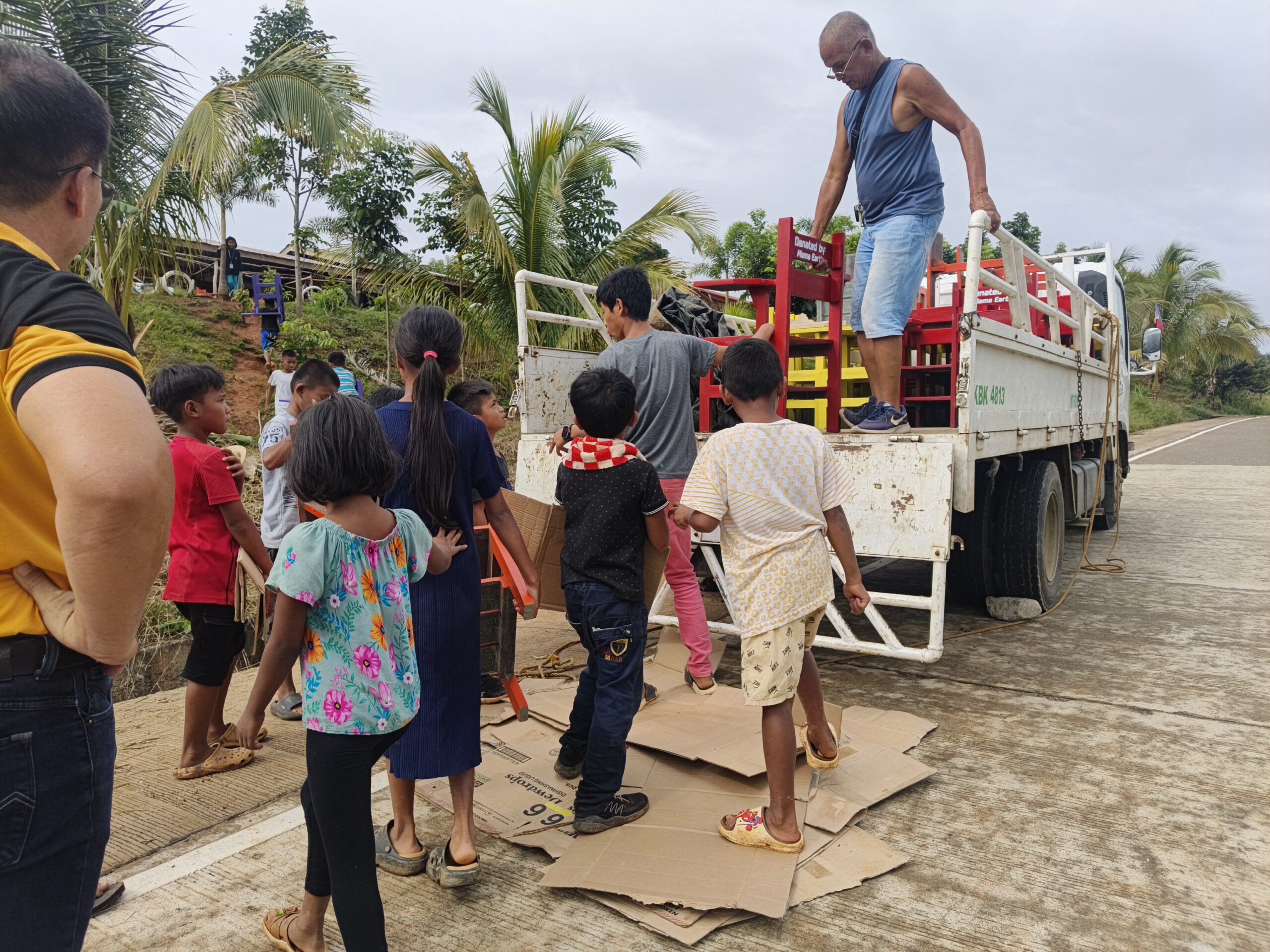
We are delivered 50 new school chairs made from plastic waste. This time, for the Tagbawi Integrated School in Rizal, Monkayo, Davao de Oro.
An almost endless demand: school chairs
A huge delight for the pupils at the Tagbawi School in Monkayo. At last, comfortable seating that will last a long time. Made from melted-down plastic waste collected from the sea during our mangrove planting work. These 50 chairs were donated by the Federsee Travel Centre in Bad Buchau. But our ambassador and underwater photographer Gerald Nowak (https://gerald-nowak.de/) is tireless. A further 80 school chairs are already in production and will be delivered to two more schools before Christmas. Many thanks to Bernhard Schwarz (funds remaining after the dissolution of his diving club) and to Stefan Schäfer (Mariner Arten- und Biotopschutz e. V.).
Anyone else wishing to donate one of these long-lasting pieces of furniture can find out how here: https://mama-earth.eco/plastic-trash-pest-for-our-wonderful-world/
An Almost Endless Need: Toys
As you know, during our mangrove reforestation efforts in Mati, we supported two kindergartens to keep the children away from the plantations, since it wasn’t always possible to ensure parental supervision. To make the kindergartens more appealing, we provided wooden building blocks, since toys are in short supply. And when parents do buy toys, they’re usually made of plastic for cost reasons.

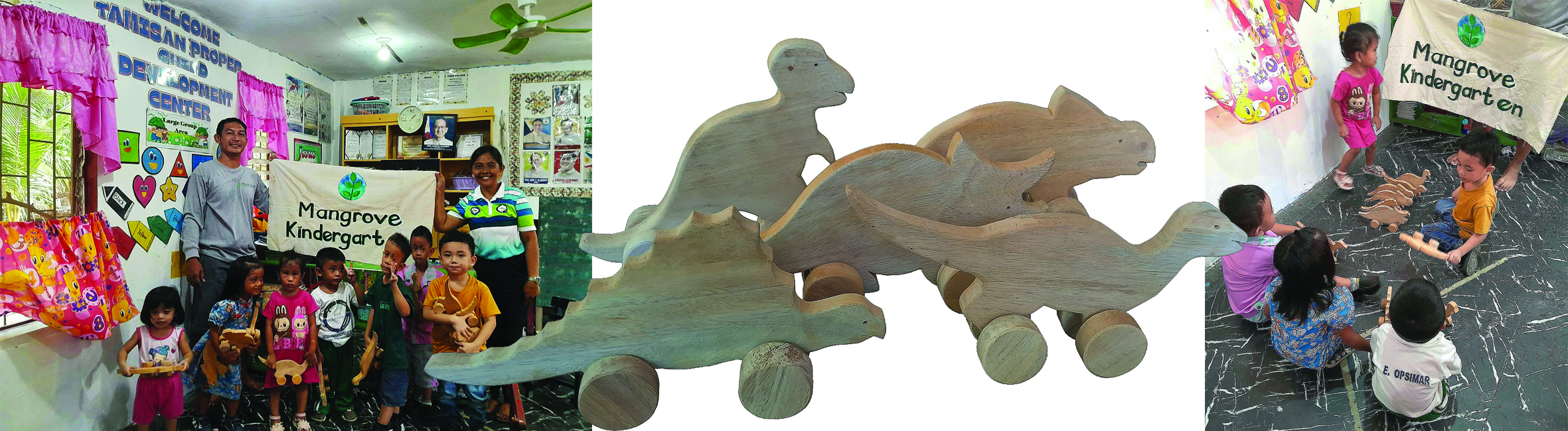
Specially around Christmas, cheap Chinese manufacturers flood the market. The toys are brightly colored, which delights children, but they don’t last more than a week. A lot of plastic for a short-lived joy. Our wooden toys are natural; the children at the preschool can paint them themselves. Painting stimulates the imagination and fosters a sense of community. We’ve now also supplied two care centers in Mati. We’re getting a flood of requests, but for cost reasons, we can only produce a limited quantity, since we distribute the toys to the children for free.
An almost endless amount of time
Lately, we’ve had to attend a lot of meetings because the end of the year is approaching and all departments apparently have to submit their reports. The meetings with the Department of Environment and Natural Resources (DENR) were particularly time-consuming. Numerous postponements took up a lot of travel time, but now all the hurdles have been cleared, and we have confirmation that we may continue planting in highly sensitive areas. This is almost like a badge of honor, as it shows us that we probably haven’t done much wrong. This special permit is granted by a subdivision of the DENR, the Protected Area Management Board in the Philippines (PAMB).
Almost infinite space requirements
Many new areas need to be surveyed, because the target for mangrove planting has been set at 10 million. In other words: ten million. That’s a number that really calls for rolling up our sleeves. So we have some busy times ahead of us, but that doesn’t scare us. At first, it’s always a matter of organization, but we can rely on tried-and-true processes. Setting up new nurseries isn’t a big deal either, since our nurseries are made entirely of bamboo, coconut wood, and palm fronds—all inexpensive materials that are readily available everywhere.
The DENR even took us out in a motorboat to survey the new areas. It was a very relaxing trip compared to our usual modes of transportation.
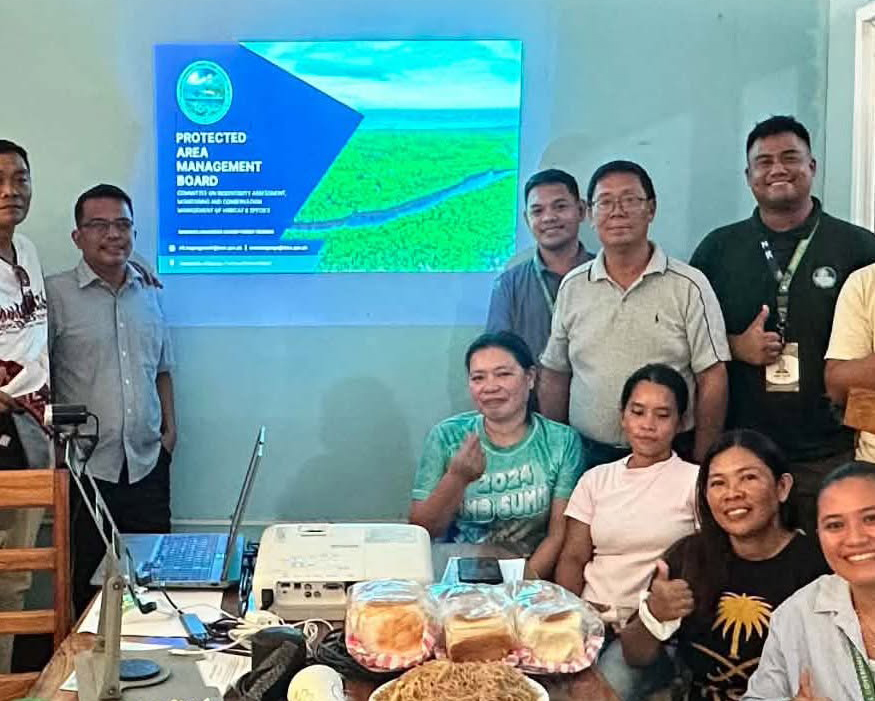
The Protected Area Management Board in the Philippines (PAMB).
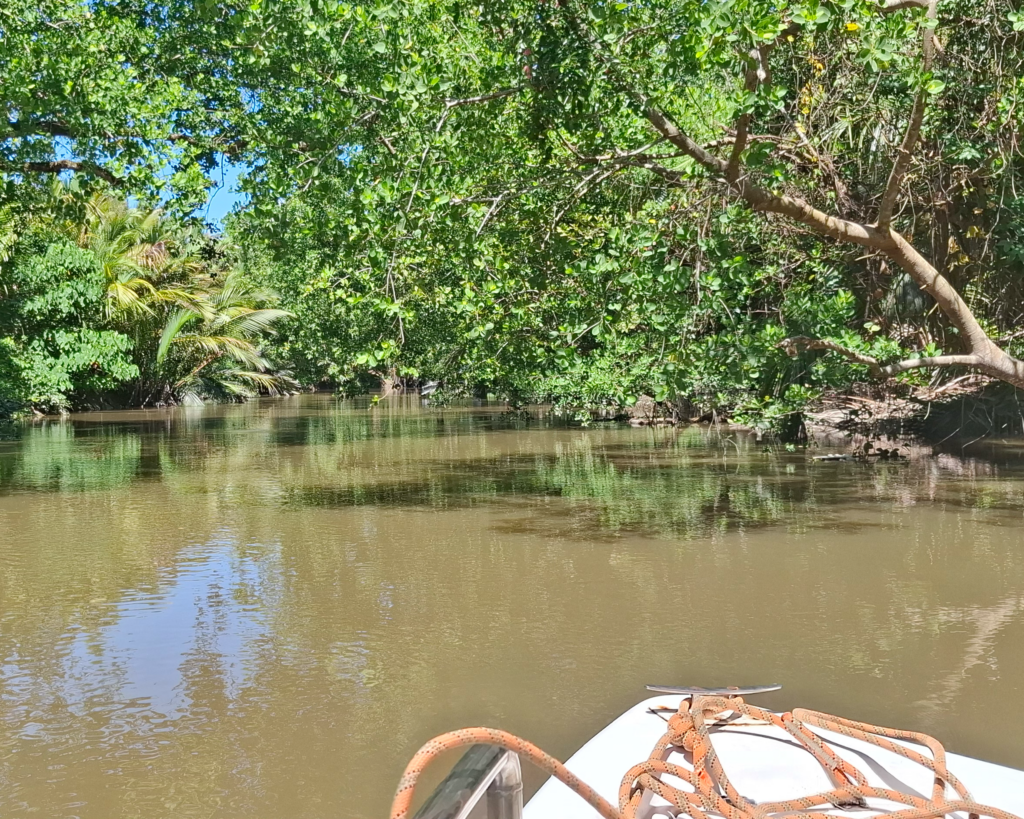
We were taken to the new planting areas in comfort by motorboat.

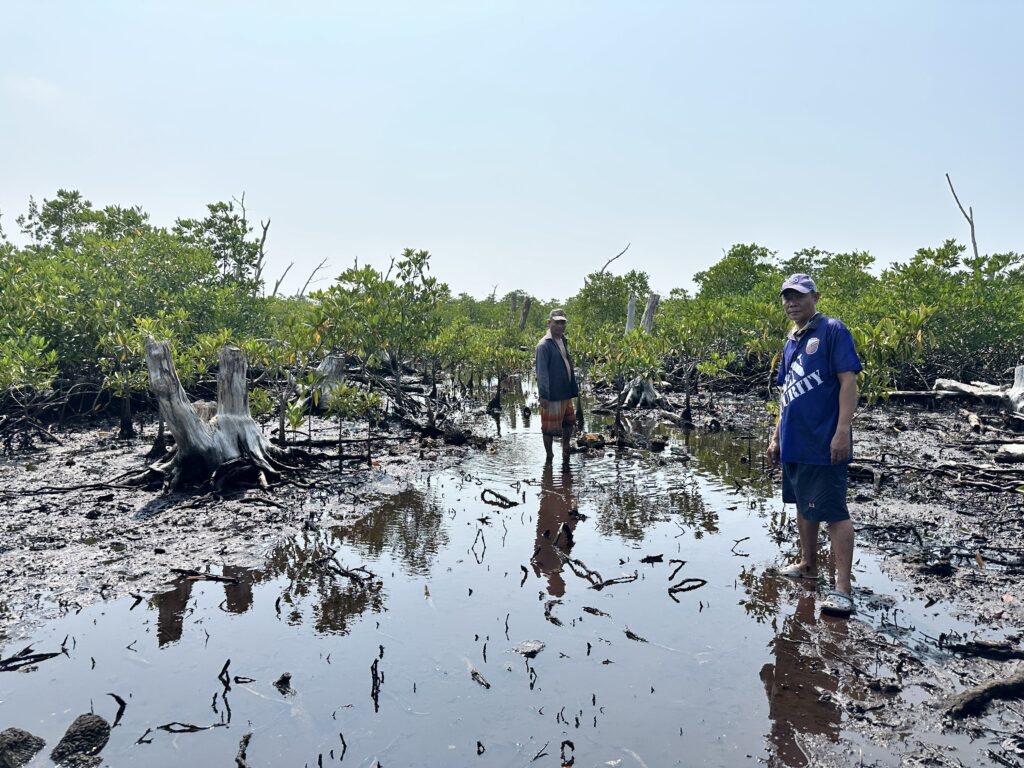
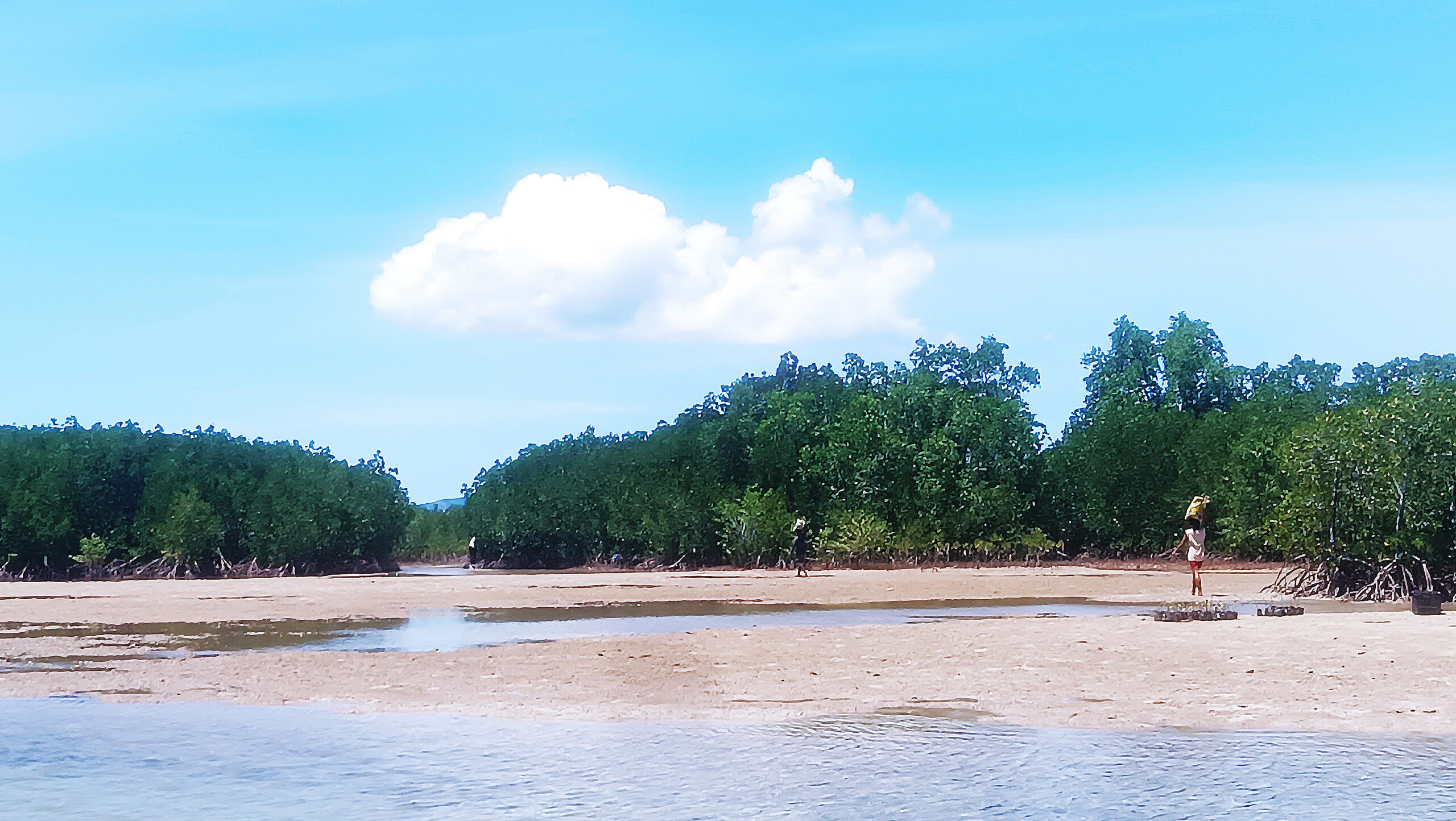
One of our vast planting areas in Banao, Baganga, Davao Oriental. The photo on the right shows the dead Papatpat mangroves from the air, and the photo on the left shows the large open areas from the ground. There are still a good two million mangroves missing here—but we’re working on it.
We’re making remarkably good progress because the visible success of our planting efforts is also inspiring our planters. The released seedlings are growing impressively well. Whenever we see the mangroves planted years ago in Mati or Baganga during our inspection trips, we never cease to be amazed. Although most of the mangroves clearly demonstrate how well our planters are doing their work, we do have to contend with some losses. Setbacks – that is, losses caused by fishing boats, driftwood, plastic and marine litter – are something we have to accept.We’re now very well-positioned and have already mapped quite a few areas—a process that’s no longer as time-consuming thanks to drone flights. The only time-consuming part is the post-processing on the computer, because rendering is a very tedious process; since we don’t have a supercomputer, we process everything using regular computers. The data volumes are enormous, so we can only fly the drone for 15 minutes. Then the SD card is full. However, since the coordinates are saved, it’s no problem to resume the flight where it was interrupted. On windy days, the batteries reach their limit, because the propellers need more power to keep the drone flying steadily. Fortunately, the drone always flies back to its starting point before the batteries are completely drained.
A Note from Us
On a personal note, we’d like to point out that you can really help us by following us on Facebook or Instagram. We’ve made a conscious decision not to run paid ads and are trying to increase our reach through our posts. It’s a long and arduous journey. We believe that reforestation deserves special attention in our deforested world. It doesn’t matter whether you plant an apple tree in your garden, participate in a community initiative for reforestation or urban greening, or commission us to plant trees or mangroves for you. What matters is that more trees enrich our planet every day. We have lost an alarming amount of forest.
It can take a good 100 years for planted trees to grow into a forest, because even many trees do not yet make a forest. A forest is a special place, a living community that you can feel. It takes time for everything to “grow into place” and become populated with animals, insects, and worms—time that humans apparently no longer have. That’s why it’s especially important to stop cutting down old trees, because they are the guardians of the forest. Embracing them is the better way.
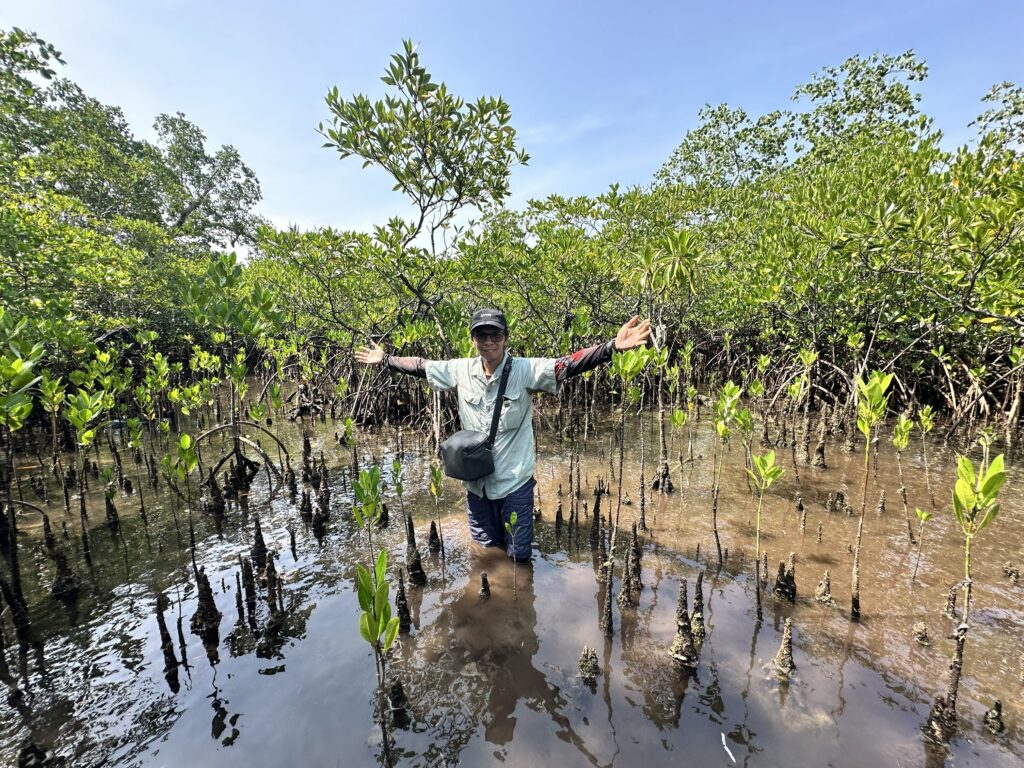
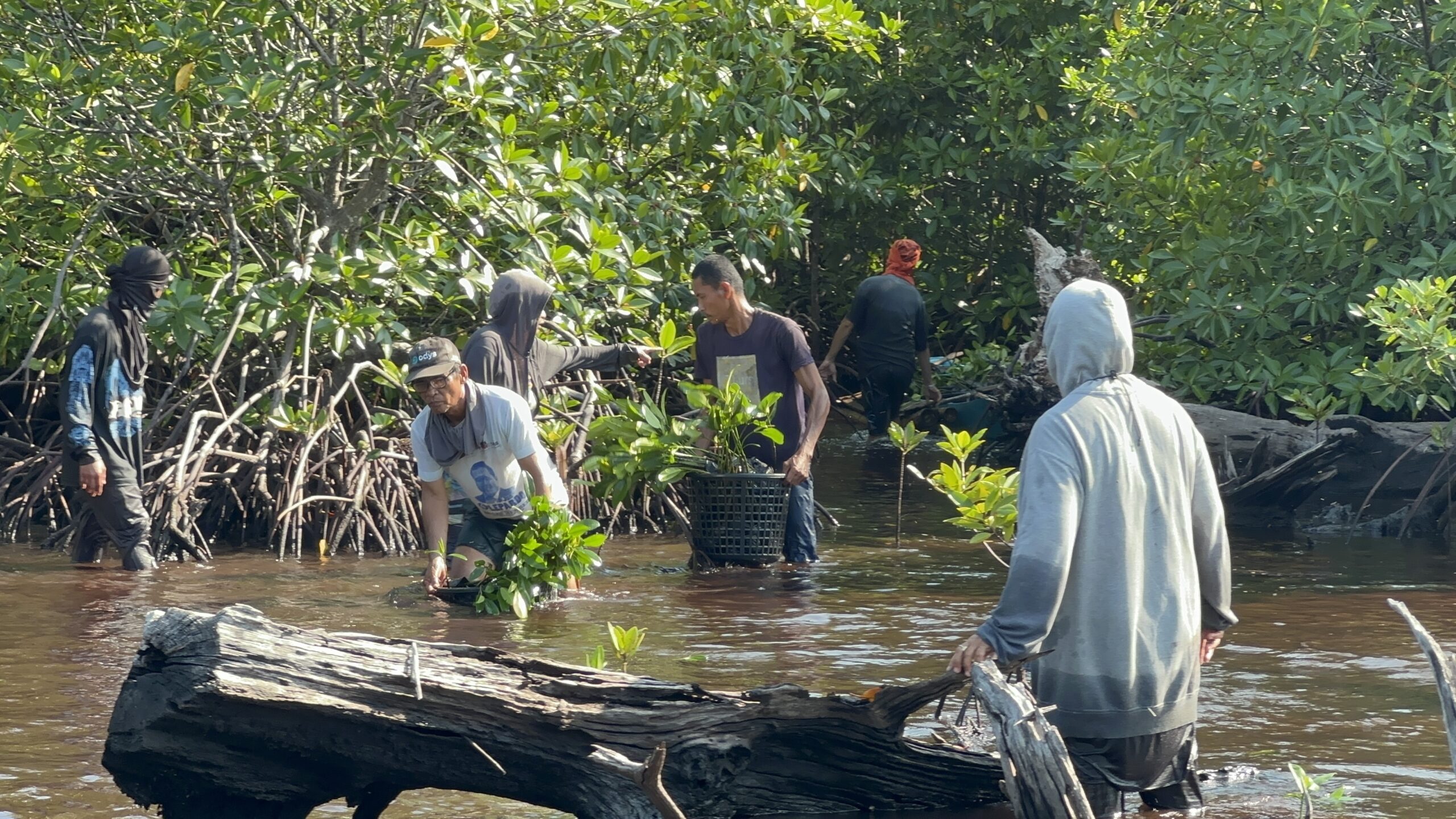
Forester Kaloy is justifiably proud of his work. Six days a week, he works alongside his assistant, Kate, to oversee the cultivation and planting of mangroves.
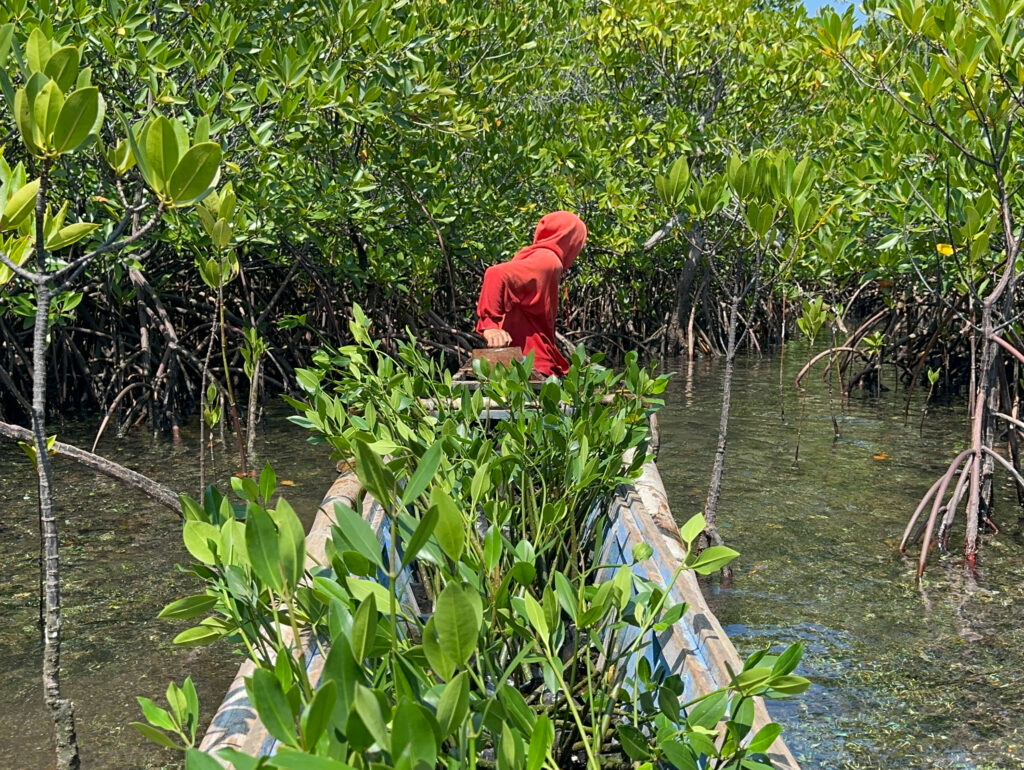
The supply of mangrove seedlings is continuous, as the nurseries deliver according to a set schedule, provided that weather conditions allow for transportation.